7 Live Service Games That Should Have Been Offline Experiences
Disappointing live service games in 2026 reveal how persistent monetization overshadows engaging gameplay, leaving fans craving offline masterpieces.
The video game landscape in 2026 is still heavily influenced by the live service model, a trend that promises continuous content and long-term revenue. Yet, for every success story, there are titles that leave players longing for what could have been—a polished, offline experience. This push for persistent online worlds and recurring monetization has led several high-profile games astray, transforming potential masterpieces into cautionary tales. The allure of constant cash flow often overshadows the core need for engaging gameplay and cohesive design, resulting in releases that feel incomplete, repetitive, or simply miss the mark their franchises once set.
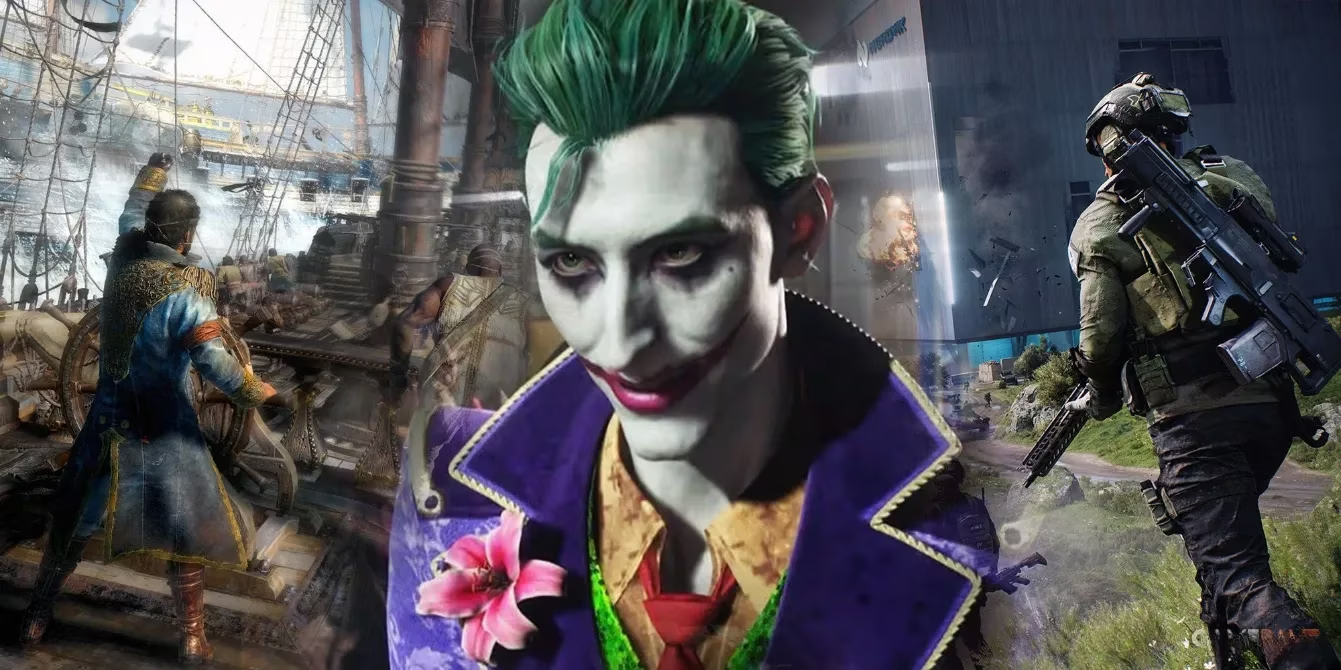
Ahoy, mateys? Not quite. 🏴☠️ When Ubisoft announced Skull and Bones, fans of the beloved naval combat from Assassin's Creed 4: Black Flag were ready to set sail. The studio had a proven track record in the genre, making expectations soar. However, what arrived after years of delays was a hollow shell. The decision to structure it as a live service title created fundamental uncertainty about the core experience. The gameplay lacked the depth, complexity, and sheer joy found in its inspiration or competitors like Sea of Thieves. Instead of a thrilling pirate adventure, players found a repetitive grind on the high seas, leading to a launch that was met with a collective shrug and rapid abandonment.
Rocksteady built a legendary legacy with the Batman: Arkham trilogy, crafting a superhero experience that felt both empowering and narratively rich. Their return to that universe with a multiplayer focus initially seemed promising. Yet, Suicide Squad: Kill the Justice League became a textbook example of live service misapplication. The monetization strategies and always-online structure clashed with player desires. Compounding the issue were controversial narrative choices that alienated the fanbase. While co-op moments with friends provided fleeting fun, the game failed to capture long-term engagement. Players were left not fighting alongside the Squad, but wishing for a return to the dark, offline streets of Gotham.
On paper, it was a surefire hit: Square Enix, Marvel's Avengers, and the MCU hype machine. How could it fail? The reality was a sobering lesson. Marvel's Avengers stumbled out of the gate with characters that felt generic, neither capturing the essence of the comics nor the charisma of the film actors. The gameplay loop was criticized for being monotonous. But the true anchor was the live service grind—a relentless demand on player time that felt more like a chore than a heroic adventure. Square Enix's model, designed for retention, instead drove players away, proving that even the mightiest IP can be grounded by poor execution and a focus on metrics over fun.
-
The Crew 2 aimed high: a massive open world where you could race cars, fly planes, and pilot boats seamlessly. The concept was ambitious and exciting.
-
However, the execution was lacking. The driving physics felt unpolished, failing to deliver the realism or excitement expected from a top-tier racing game.
-
Its live service promises of fresh events and challenges quickly revealed themselves to be a cycle of repetitive missions with little meaningful content.
-
The dream of a diverse vehicular playground became a fragmented and forgettable experience, unable to hold players' attention for the long journey it envisioned.
BioWare's name was once synonymous with epic, story-driven RPGs like Mass Effect and Dragon Age. The announcement of a new sci-fi IP, Anthem, generated immense excitement. The game's flying mechanics and combat had genuine moments of brilliance, showcasing the studio's potential. Yet, the live service framework it was shackled to felt at odds with BioWare's strengths. The loot-driven grind and sparse endgame content left players feeling the sting of unmet potential. For many fans, Anthem represented a misstep—a dazzling world and compelling mechanics that might have shone brightly as a focused, offline adventure but were dimmed by the demands of a service model.
The Battlefield franchise is built on large-scale, all-out warfare. Battlefield 2042 promised to escalate this to new heights with massive maps and 128-player battles. Its launch, however, was a disaster plagued by technical issues, bugs, and the removal of series staples. The live service model, intended to build the game over time, failed to retain a shattered player base. While EA has supported it with updates, the damage was done. A critical misstep was the complete absence of a single-player campaign, alienating a segment of the audience that cherished the narrative-driven moments of past games. It prioritized scale and service over stability and soul.
Finally, we have Babylon's Fall. Developed by PlatinumGames—masters of visceral, stylish combat—in partnership with Square Enix, expectations were naturally high. The game's combat system, particularly its dynamic battles, received praise for showcasing the studio's expertise. Unfortunately, almost every other aspect faltered. The live service model attached to this shaky foundation had no chance. Servers were shut down less than a year after launch, with few meaningful updates released to address core problems. It stands as one of the most stark examples: a game with a brilliant core mechanic utterly sunk by the decision to be an always-online service, leaving paying customers with nothing but disappointment.
In 2026, the conversation continues. These seven titles serve as powerful reminders that the live service model is a tool, not a genre. When applied to games with strong, complete visions built for sustained engagement, it can work wonders. But when used as a mandatory framework for experiences that crave narrative conclusion, focused design, or simply offline integrity, it can undermine a game's very foundation. The legacy of these games isn't just in their metrics or server status; it's in the lingering question of what magnificent, offline experiences they could have been.
0 Comments