Battlefield 2042's Bollards and the Tank That Flew Over Them
Battlefield 2042 physics and tank gameplay flaws highlight persistent issues, as bollards fail to stop vehicles, impacting tactical balance.
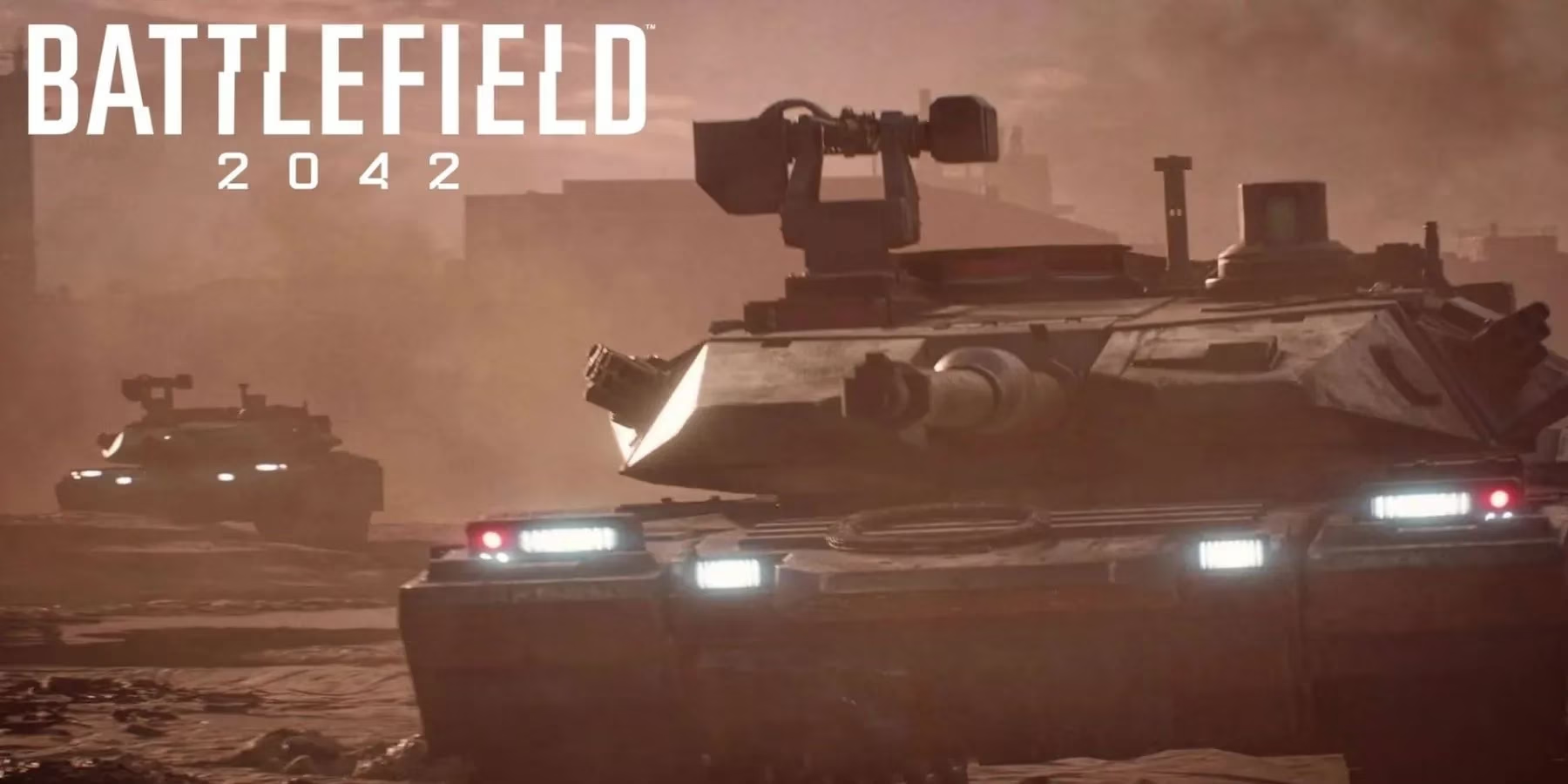
In 2026, Battlefield 2042 remains a case study in ambition, controversy, and the strange physics of modern warfare. The shooter launched with a long list of complaints, and even after years of patches, some players still remember the small details that broke the fantasy. One such detail came from Reddit user Naive_Frame9691, who shared a clip that turned a tactical tool into a punchline. The clip showed a tank, a heavy machine that should fear narrow streets and infantry traps, bouncing over a set of raised bollards as if it were a balloon. The bollards were supposed to stop vehicles. Instead, they became a ramp.
A Tactical Asset That Failed Its One Job
Bollards in Battlefield 2042 are rising pillars placed in urban sections of maps. Their purpose is simple: block vehicles, create infantry-only lanes, and force tank drivers to choose different routes. In a game where tactical positioning often decides fights, such map elements matter. They shape flow, protect objectives, and give foot soldiers a chance against armor. The problem shown in the clip was not a random glitch like a cutscene kill bug. It was a physics problem. The tank approached the bollards at an angle while coming up a set of stairs. That alone should have been difficult for a heavy vehicle. Instead of slowing or getting stuck, the tank hit the incline and launched itself over the bollards. It floated over the obstacle that was designed to stop it.
The scene was absurd. One moment the bollards rose, promising a barrier. The next moment the tank sailed over them. For a game like Battlefield, this is more than a funny clip. It undermines the rules players rely on. If bollards cannot stop a tank, why do they exist? If a tank can climb stairs and hop over defenses, then infantry have fewer safe spaces. The tactical asset becomes decoration. Players might laugh, but the laughter hides frustration. They expect a heavy tank to feel heavy. They expect a barrier to be a barrier.
| Element | Intended Role | Observed Problem |
|---|---|---|
| Bollards | Stop vehicles and create chokepoints | Tank bounces over them |
| Tank | Heavy, slow, route-limited | Flies like a balloon |
| Stairs | Difficult terrain for armor | Acts as a launch ramp |
| Tactical positioning | Rewards map awareness | Undermined by physics |
The Tank That Should Not Fly
It is worth remembering that this was hardly the first time tanks went where they were not supposed to in Battlefield 2042. Earlier in the game's life, players used the vehicle call feature to place tanks on the roofs of the highest buildings. That trick turned armored vehicles into rooftop snipers and revealed how fragile map boundaries could be. The bollard clip added another example to the list. Hovercrafts were already known for their wild mobility. A tank, however, is supposed to be a different kind of vehicle. It trades speed and agility for armor and firepower. When a tank starts flying over defensive pillars, that trade-off disappears.
Few players want a tank that can fly like a bird unless they and only they are piloting it. That old joke captures the problem. A flying tank is fun for the driver and miserable for everyone else. It breaks the infantry experience. It also makes map design feel pointless. Urban maps in Battlefield are built around lanes, cover, and verticality. Bollards are part of that language. They tell players where vehicles can go and where infantry can hold. When one physics quirk ignores that language, the conversation between map and player collapses.
A Wider Pattern of Rough Edges
In the grand scheme of Battlefield 2042, the bollard issue may seem minor. The game had bigger problems. There were bugs, balance complaints, and the Santa Claus skin debacle. The developers attempted to address problems and rolled out new content like the Attack of the Elves mode. By 2026, the game has had time to evolve, and some fixes have landed. Yet for many players, it was too little too late. The bollard clip survives because it represents a lack of attention to detail. It is not about one tank or one map. It is about vehicle physics that do not always respect the intent of the design.
A tactical shooter needs consistent rules. Players can forgive a strange animation or a temporary server issue. They have a harder time forgiving a world that stops making sense. If a tank can bounce over bollards, then every barricade, wall, and chokepoint becomes suspect. Players begin to test the edges. They look for exploits. They stop trusting the map. That distrust spreads. It affects how players approach objectives, how they choose vehicles, and how they judge the game's quality. A small physics oversight can become a symbol of a larger problem.
Why Details Matter in Battlefield
Battlefield has always been about combined arms. Infantry, tanks, helicopters, and transport vehicles share the same sandbox. The best moments come from the tension between them. A tank is terrifying, but it can be trapped. Infantry are vulnerable, but they can use cover and explosives. Map design sets the stage for that tension. Bollards are a small part of the stage, but they are a meaningful one. They create no-go zones for armor. They give infantry a moment to breathe. They force tank drivers to think.
When those rules fail, the sandbox tilts. A tank that can climb stairs and hop bollards can appear where it should not. It can flank through infantry lanes. It can escape traps. It can turn a carefully designed street into a highway. That changes the pace of battle. It also changes player expectations. If the game does not enforce its own physical rules, players will exploit the gaps. Some will enjoy it. Many will not.
-
🚧 Bollards should create reliable no-go zones.
-
🛡️ Infantry should have safe lanes in urban maps.
-
🧭 Tank drivers should plan routes instead of improvising.
-
⚖️ Vehicle physics should enforce weight and trade-offs.
-
🎯 Map design should reward positioning, not glitches.
A Lesson for the Future
By 2026, Battlefield 2042 stands as a divisive entry in a long-running series. It is available on PC, PS4, PS5, Xbox One, and Xbox Series X. Its developers tried to fix it. Its community argued about it. Some players moved on, while others stayed. The bollard clip remains a tiny but memorable example of why details matter. It is not the biggest bug in the game. It is not the most game-breaking exploit. But it is a perfect illustration of how a tactical asset can be cheapened by physics that ignore their purpose.
The tank that flew over the bollards is funny. It is also a warning. In a game about war, weight matters. Armor matters. Cover matters. When a heavy tank bounces like a balloon, the fantasy cracks. Future Battlefield titles can learn from this. They can build vehicles that feel heavy, maps that hold their shape, and defenses that do their job. They can make sure bollards stop tanks. If they do, players will notice. And they will remember for the right reasons.
0 Comments