Battlefield 2042's Holiday Skins and the Live-Service Warning
Battlefield 2042 Christmas skins exposed deeper monetization issues, while Specialists clashed with the series’ immersive Battlefield roots.
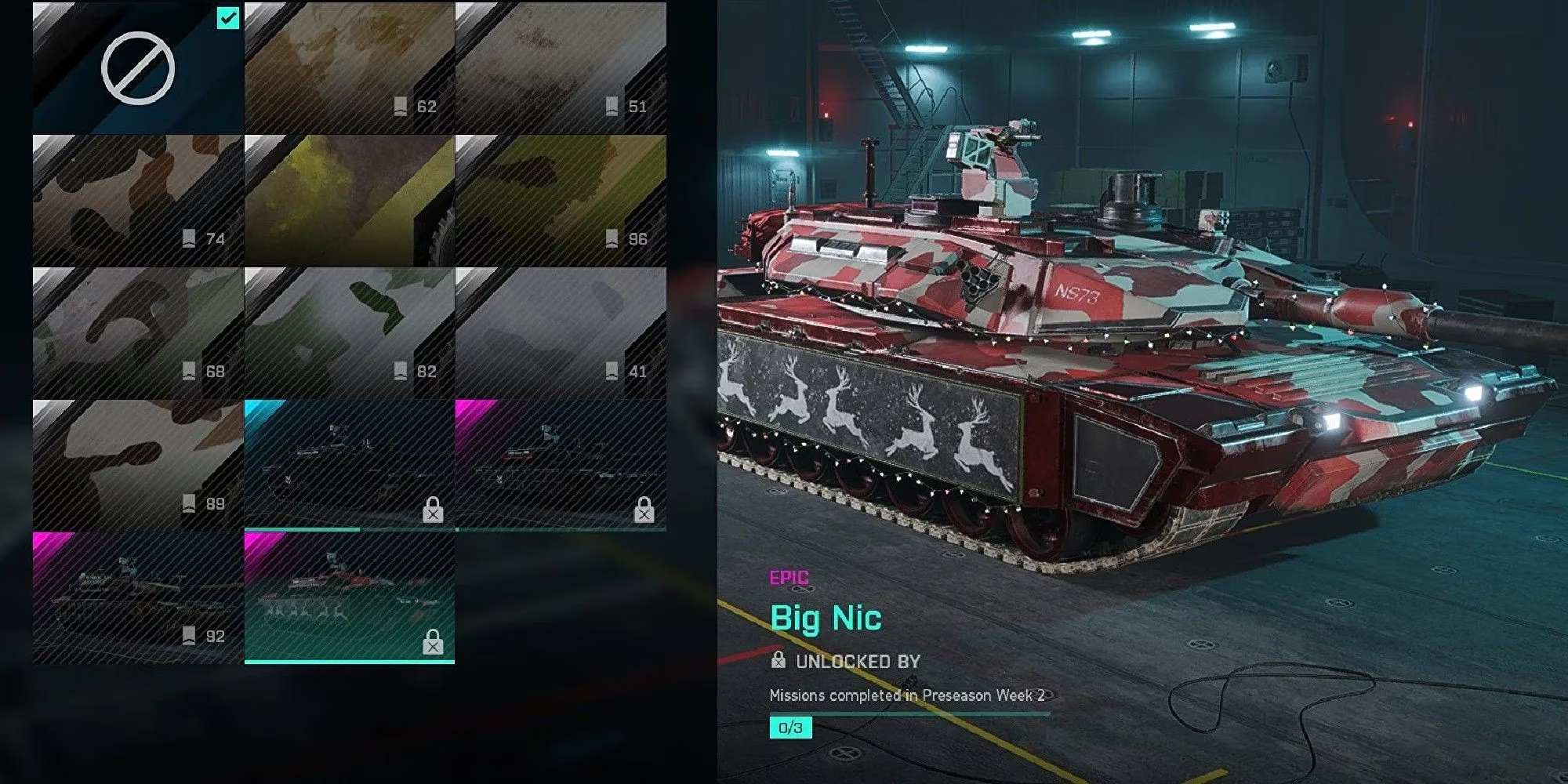
In late 2021, Santa Claus revives a player for the third time in a row. An M5C Bolte, trussed up like a Christmas sleigh, spawn-camps the open ground on another terribly designed Rush map. Sundance appears from the sky like a red-nosed reindeer. A developer who loves the series weeps into a keyboard while executives push a Lollipop skin for Boris. That scene is Battlefield 2042 in miniature. 🎄
DICE had just revealed the game's first set of cosmetics: free, holiday-themed skins earned through in-game challenges during what the roadmap called 'pre-season.' Players knew it better as 'oh, we need to fix our game season.' The skins being free was not the point. In a few months, dozens of ridiculous costumes would arrive for the Specialists, and they would cost money. The Santa skin would not stick around. The intent behind the cosmetic design would.
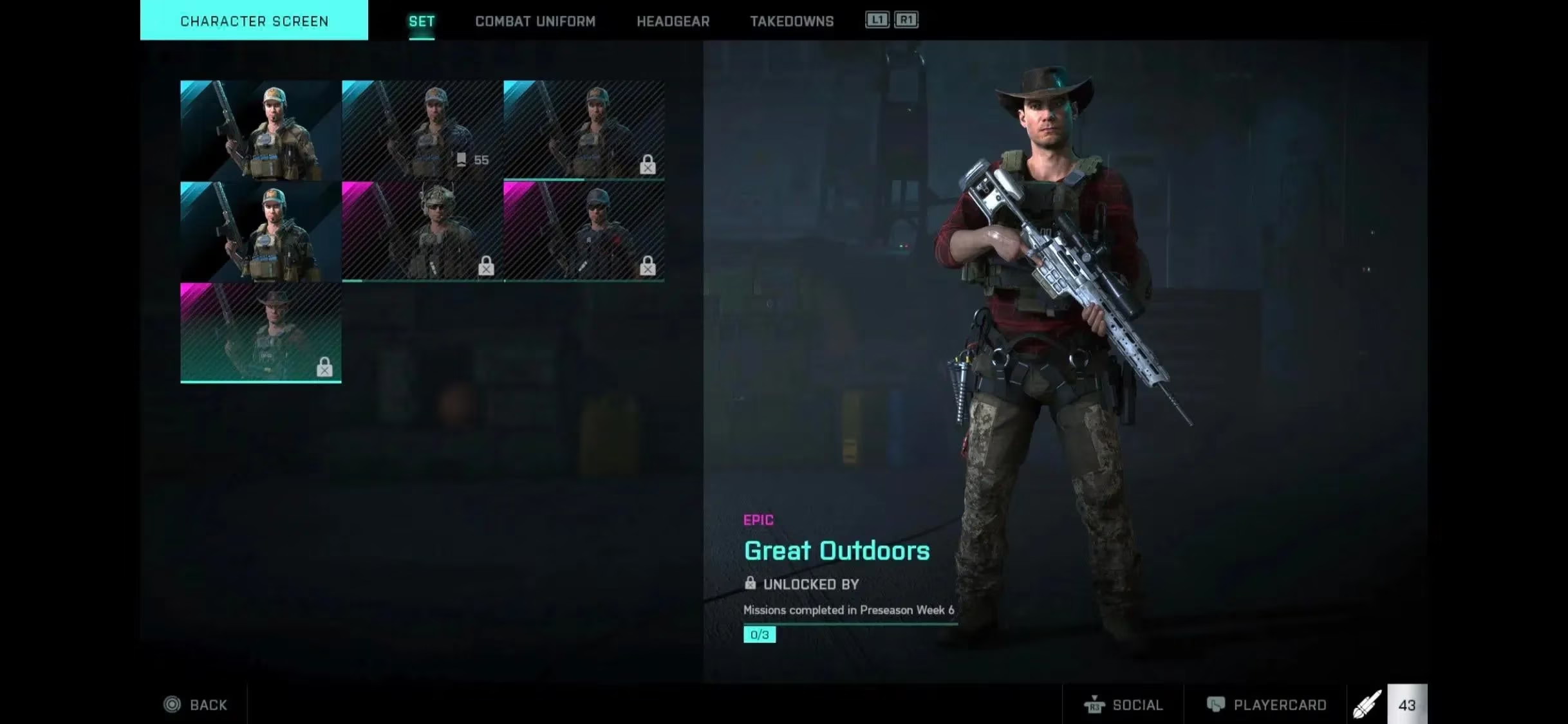
The writer behind the original criticism made one thing clear: skins alone did not bother him. Battlefield remained Battlefield even if half the enemy team dressed like bananas and every tank looked like a clown car. Emotes were not the problem either. The problem was the promise. Players had been sold a fun Battlefield game, not an interactive cosmetics catalogue. The holiday event was not a cheerful bonus; it was the first visible tile in a monetization mosaic.
Battlefield 2042, in that view, was designed solely to sell skins. Somewhere in development, something went seriously wrong. Perhaps the project had been pitched with Hazard Zone as its flagship mode. Perhaps it had once been a battle royale. Whatever the original plan, most of the game felt out of place and childish, as if the people assembling it did not really know what they were doing. In a last-ditch attempt to salvage value from a ramshackle project, the publisher funded a half-a-million-dollar trailer and started producing skins. Specialists existed to sell them. That argument was blunt, but it was difficult to refute.
Then there were the Specialists themselves. Their cheesy, out-of-place, almost pathetic end-of-round voice lines were one problem. The total disregard for the formula that had made Battlefield immortal for twenty years was another. In Battlefield 1, a round could open on a war-torn landscape while a narrator spoke about pushing hard enough that light breaks through the clouds. In Battlefield 2042, Mackay said, 'Well, well, well, that was fun,' after killing fifty copies of himself. One game felt like an immersive masterpiece. The other felt poor by comparison.
The writer even admitted that Specialists had begun to grow on him. There were elements of the design theory that worked. Everyone could use every piece of kit, which allowed more customization and more unique playstyles. The Wingsuit was amazing. The Grappling Hook was perfect for finding height advantages. The Ballistic Shield was sometimes the only way to deal with players spawn-camping the lifts on Kaleidoscope Breakthrough. Those were real strengths. Yet the more the game was played, the more its weaknesses crowded them out: bad map design, poorly thought-out Rush objective placement in the newest mode, general hitreg bugs, and poor performance. The Specialists started to look less like a bold design choice and more like a gimmick designed to open wallets.
The frustration was not even anger. It was exhaustion. After Battlefront 2 and the disastrous launch of Battlefield 5, there had been a familiar hope: surely DICE and EA had learned their lesson. Surely they could not mess it up again. Battlefield 2042 was an even bigger disaster. The first trickle of Christmas cosmetics was just the start of an avalanche of nonsense skins that would wash over the game in the following months. Meanwhile, the fundamental enjoyment of the game was left broken and twitching at the bottom of a very large money bag.
By 2026, that holiday event reads like a time capsule. ⏳ The live-service era has moved on, and Battlefield 2042 stands as a cautionary tale about what happens when a storied shooter is rebuilt around storefront logic. The industry has seen the same pattern elsewhere: cosmetic bundles arrive before stability, battle passes promise content while core systems decay, and players are asked to buy identity instead of experiencing it. The next Battlefield may learn from this. If it does, the lesson will be simple. A game cannot be fixed by skins. It cannot be redeemed by a Santa suit or a Christmas tank. It has to be fun first. 🎮
| What Battlefield 2042 Prioritized | What Players Wanted |
|---|---|
| Cosmetic bundles and Specialist skins | A stable, polished shooter |
| A live-service storefront | Maps and modes that respected the formula |
| Cheesy end-of-round quips | Immersive atmosphere and tension |
| Monetization before repair | A Battlefield game worth the money |
The holiday skins were never the whole problem. They were a symptom. They revealed a design philosophy that treated players as customers first and soldiers second. In 2021, that was worrying. In 2026, it is a warning label. ⚠️
According to coverage from Eurogamer, the wider backlash around Battlefield 2042 makes more sense when viewed through the gap between player expectation and live-service execution: fans were looking for coherent map flow, strong class identity, and technical stability, while the game's public image kept circling back to Specialists, seasonal cosmetics, and tonal inconsistency. That contrast helps explain why even harmless holiday skins became symbols of a larger trust problem rather than simple optional extras.
0 Comments