Battlefield 2042's Long Pre-Season: A 2026 Player's Look Back
Battlefield 2042's 12-week pre-season felt like a content desert, but the leaked Exposure map offered hope amid a rocky launch.
I still remember the feeling of dropping into Battlefield 2042 on launch night. The tornadoes were spectacular, the scale was huge, and the wingsuit launches gave me a rush. But I also remember the bugs, the missing features, and the nagging sense that the game had arrived before it was ready. Like most Battlefield launches, it was rough. Unlike some, this one felt especially bare. So when I heard that the pre-season might last a whopping 12 weeks, I was not surprised—just disappointed.
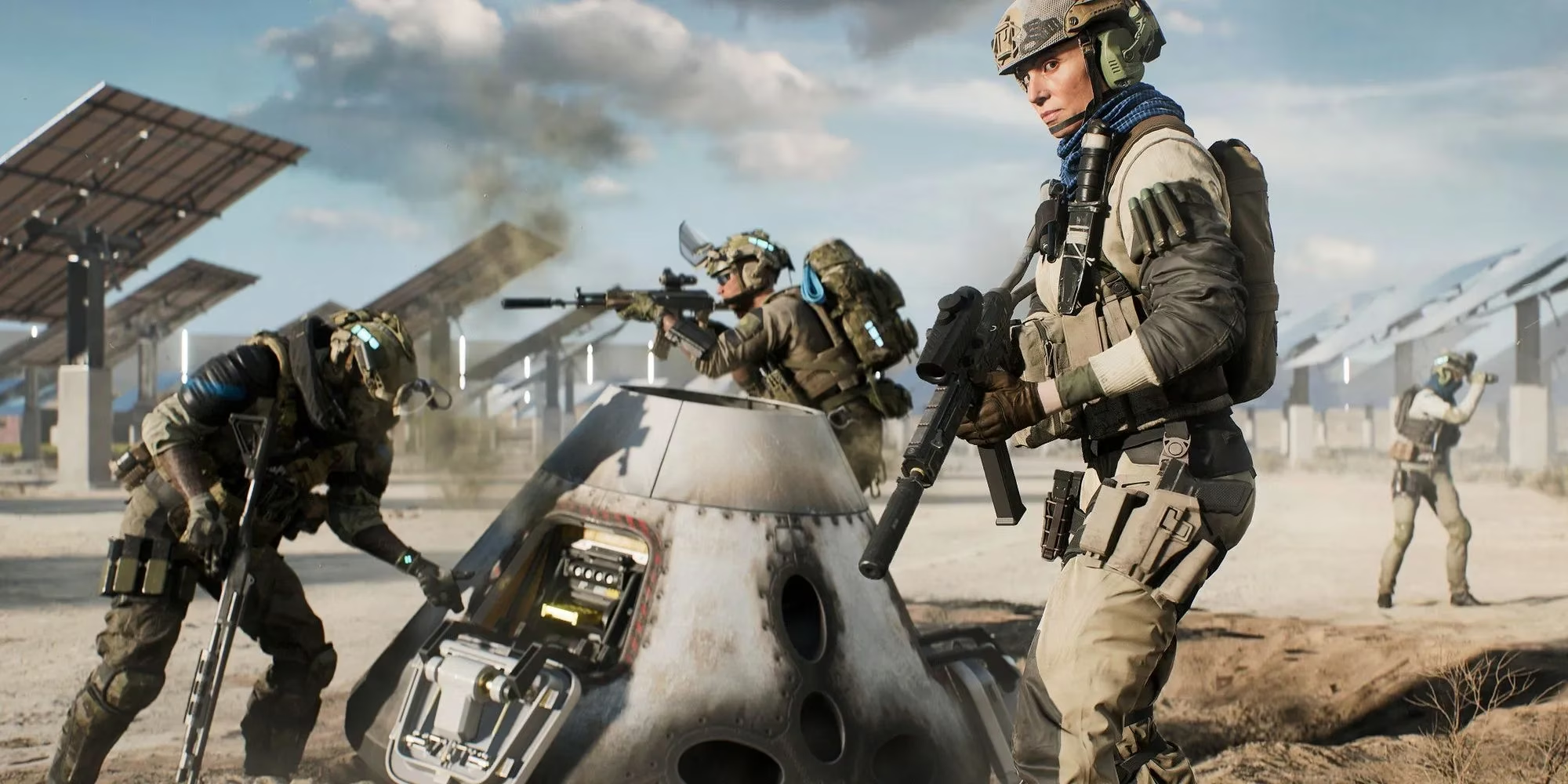
At the time, a data miner named temporoyal dug into Battlefield 2042's files and found intel suggesting the pre-season would run for 12 weeks. According to that leak, reported by Eurogamer, the first actual season would not start until March 2022. That was five months after release. For a live-service shooter, five months is an eternity. I played a lot during those early weeks, but by December I was already wondering where the new maps, modes, and rewards were.
Why the Wait Felt So Long
Battlefield 2042 launched with All-Out Warfare, Hazard Zone, and Portal. Portal was brilliant, a love letter to older Battlefield games. Hazard Zone had tense moments. But the core progression felt thin, and the seasonal content pipeline was invisible. DICE was clearly focused on fixing bugs and glitches. The game needed stability patches more than it needed a battle pass. Still, the lack of a clear roadmap made the 12-week pre-season feel like a content desert.
The likeliest explanation for the long pre-season is that DICE was still figuring out seasonal features and monetization. Development time was mostly going into fixes. Another data mine from earlier that month revealed that DICE had at least considered monetizing the holiday season with Christmas-themed cosmetics. Player backlash forced that plan on hold. I remember the community reaction: it was not just about cosmetics, it was about trust. People felt the game was asking for more money before it had delivered a complete experience. So DICE likely went back to the drawing board.
| Timeline point | What I remember | How it felt |
|---|---|---|
| November 2021 | Battlefield 2042 launches | Exciting but buggy |
| December 2021 | Holiday cosmetic backlash | Frustrating and tone-deaf |
| Pre-season | 12-week leak | Way too long |
| March 2022 | Leaked Season 1 target | Seemed distant |
| Later in 2022 | Actual Season 1 arrives | Relief, but trust was damaged |
The Exposure Map That Almost Made the Wait Worth It
The same data mine that revealed the five-month pre-season also gave me something to look forward to: a new map called Exposure. The concept was fantastic. It centered on a secret US/Canadian research facility hidden in the Rocky Mountains. A landslide had exposed the installation. Russia believed it was a weapons research facility and sent forces to take control. The US and Canadian militaries rushed reinforcements to defend it. I loved that premise. It felt like classic Battlefield: a beautiful, vertical environment with a geopolitical excuse for chaos.
Exposure eventually arrived, and it became one of my favorite maps in Battlefield 2042. The rocky terrain, the secret labs, the verticality—it gave me the same feeling I had in older Battlefield maps. But it also reminded me how long I had waited. A single map, no matter how good, could not fill a five-month gap by itself.
Looking Back from 2026
Now, in 2026, I can see Battlefield 2042's long pre-season as a warning sign for live-service shooters. Players will tolerate bugs if the core game is fun and the communication is honest. They will not tolerate silence, missing features, and a monetization plan that arrives before the content. The 12-week pre-season was not just a schedule problem. It was a trust problem.
I still played Battlefield 2042 for hundreds of hours. I loved the Portal mode, the chaotic 128-player matches, and the occasional moment when a tornado wiped out a squad. But I also remember the empty feeling of logging in during the pre-season and seeing the same content. The game needed time, and DICE needed to fix it. The question was whether players would stick around long enough.
In 2026, the franchise has moved on, but the lessons remain. A live-service game needs a clear roadmap, frequent updates, and respect for player time. Battlefield 2042 eventually found its footing, but the road there was longer than it needed to be. The 12-week pre-season was a rough start, and for many players, it was the moment they decided to wait. I was one of them—for a while. Then I came back. That is the strange thing about Battlefield: even when it frustrates me, it still pulls me in.
What I Learned as a Player
-
A long pre-season can kill momentum.
-
Bug fixes are essential, but so is content.
-
Monetization before trust is a mistake.
-
A great map like Exposure can restore some faith.
-
Clear communication matters as much as raw content volume.
If I could tell DICE one thing back in 2021, it would be this: do not let the pre-season become the main event. Fix the game, talk to the community, and give players a reason to log in. Battlefield 2042 had the bones of something great. It just took too long to show us the meat.
0 Comments