Battlefield 2042 Update 4.1: How a Single Hotfix Reshaped Chaos into Tactical Clarity
Battlefield 2042 Update 4.1 brings sweeping gameplay changes, retiring 128-player Breakthrough and rebalancing weapons for tactical depth.
The download bar crept across Marcus’s screen like dawn across a shattered skyline, a dull amber glow in his apartment in the spring of 2026. Battlefield 2042 had become a familiar beast over the years—wild, unpredictable, often roaring louder than it could think. Update 4.1 promised more than the usual list of tweaks; it whispered of fundamental change. Marcus had heard rumours that the 128-player Breakthrough mode was being retired from All-Out Warfare, and the thought settled in his mind like a stone dropped into murky water. He clicked install, and the game began to reinvent itself yet again.
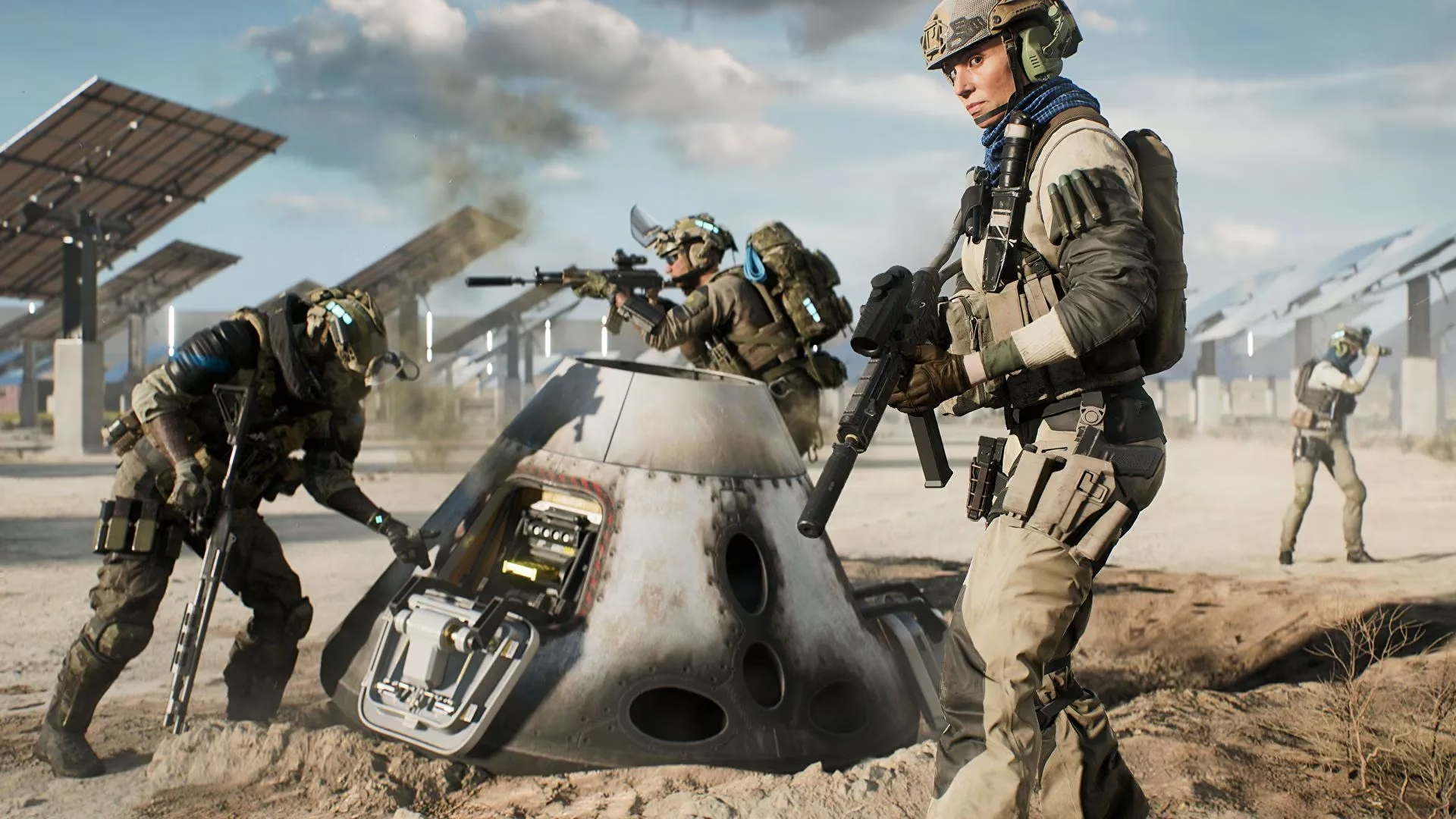
When the update finished, Marcus launched straight into Breakthrough 64 on Orbital. The difference hit him within seconds. No longer did he spawn into a meat grinder where eighty players on each side collided like two rivers of gunfire merging into a single, suffocating flood. Instead, the battle felt like a chessboard carved from steel and smoke—each squad movement mattered, each flank had breathing room. DICE had admitted that certain maps simply weren’t large enough for 128 players, and that honesty was a rare balm. On Hourglass and Renewal, the 64-player versions now reigned, while Discarded and Kaleidoscope kept their larger layouts. It was, Marcus thought, like watching a symphony conductor finally reduce the orchestra to a size the hall could handle; the notes no longer blurred into white noise.
He swapped to a sniper loadout, curious about the bolt-action changes. For years, holding breath had been a minor ritual, but now it came with a sharpened edge: a maximum of five seconds, with an equal penalty if you drained it completely. The first time Marcus held his breath too long and felt his scope jitter, he understood. It reminded him of a climber gripping a cliff face—you could tense every muscle for a precious moment, but then your body demanded rest, and the fall became inevitable. This new rhythm forced patience, rewarding those who timed their shots like a metronome rather than those who camped endlessly.
DMRs and assault rifles had also been massaged into a kinder shape. Horizontal recoil on DMRs was reduced, making it feel as if the barrel now pushed back with a firm hand rather than a wild shove. The AK-24 lost its semi-auto fire mode entirely, while its burst mode now spat lead at 900 RPM—a cadence that turned controlled bursts into a heartbeat drumbeat. The SFAR-M GL grew fangs at short and medium range, its damage drop-off stretched like taffy. Marcus noticed how weapons without attachments now handled more cleanly; the base recoil had been improved to compensate for the reduced impact of muzzle attachments. It was a quiet revolution, the kind that made vanilla weapons feel like a freshly tuned instrument rather than a penalty for not grinding attachments.
Specialists received their own surgery. Angel remained reliable, Irish still barked orders, but it was Boris’s SG-36 Sentry Gun that felt truly reined in. The little turret no longer tracked enemies through walls like a hound chasing phantom scents; its damage, health, rate of fire, and lock-on range had all been trimmed. Marcus watched an enemy Boris deploy the gadget, and for the first time, he didn’t feel an urge to flee. Instead, he flanked it calmly. The turret still contributed, but it was no longer a miniature god of war. Spotting now highlighted enemies with a red dot visible to allies, a small thread of teamwork woven into the chaos.
Movement and inputs felt smoother too, as though someone had polished the glass between Marcus’s fingers and the screen. DICE had reduced input lag and adjusted trigger weight so that successive input felt more responsive. Aim assist, long a source of grumbling, now behaved more like a gentle magnet than a clumsy hand—acquiring moving targets with greater fidelity, no longer snagging on thin obstacles. Deployable gadgets appeared instantly, shedding their former hesitation like a snakeskin. The Insertion Beacon grew in both size and visibility, a towering spire that felt almost arrogant, daring enemies to notice it.
Vehicles shifted slightly in the lineup. The M5C Bolte, stripped of its unintentional extra damage against aircraft, was now officially classified as an armoured vehicle, altering how it was categorised in Conquest and Breakthrough. On Kaleidoscope and Manifest, each team lost one light ground vehicle, making armour feel a touch more precious. The NTW-50 anti-material rifle gained an extra bite against tank tracks, a small gift to engineers who liked to hunt heavy metal.
Marcus ended his session on a Breakaway Breakthrough match. The map, now locked to 64 players, felt like a world that had finally exhaled. Squads moved in deliberate arcs, vehicles dueled with meaning, and the absence of the 128-player hurricane allowed nuance to bloom. He still died to unexpected angles and rookie mistakes, but each death felt like a puzzle piece rather than a random tumble. As the round closed—without the false promotion screen that had previously mocked players—he stared at the scoreboard quietly. The game hadn’t become perfect; it still carried scars from its birth. But Update 4.1 had reshaped it into something that no longer fought itself. It was, perhaps, the moment when Battlefield 2042 stopped being a spectacle of excess and started learning the art of restraint.
0 Comments