Battlefield 2042: Why Its Explosions Are Still an Underrated Visual Highlight
Battlefield 2042 explosion effects impress with detail and realism, yet are often overlooked amid chaotic 128-player lobbies.
Years after its launch, Battlefield 2042 still provokes strong reactions from the dedicated fanbase. The 128-player lobbies create unrelenting chaos, and many of the game’s design choices continue to divide players. Yet one element deserves far more credit than it usually receives: the explosions. Whether it is a small robot dog detonating or the massive destruction of the Orbital rocket, Battlefield 2042 contains some of the most detailed explosion effects in the series. The problem is not the quality of these effects. It is that players are rarely in a position to stop and appreciate them.
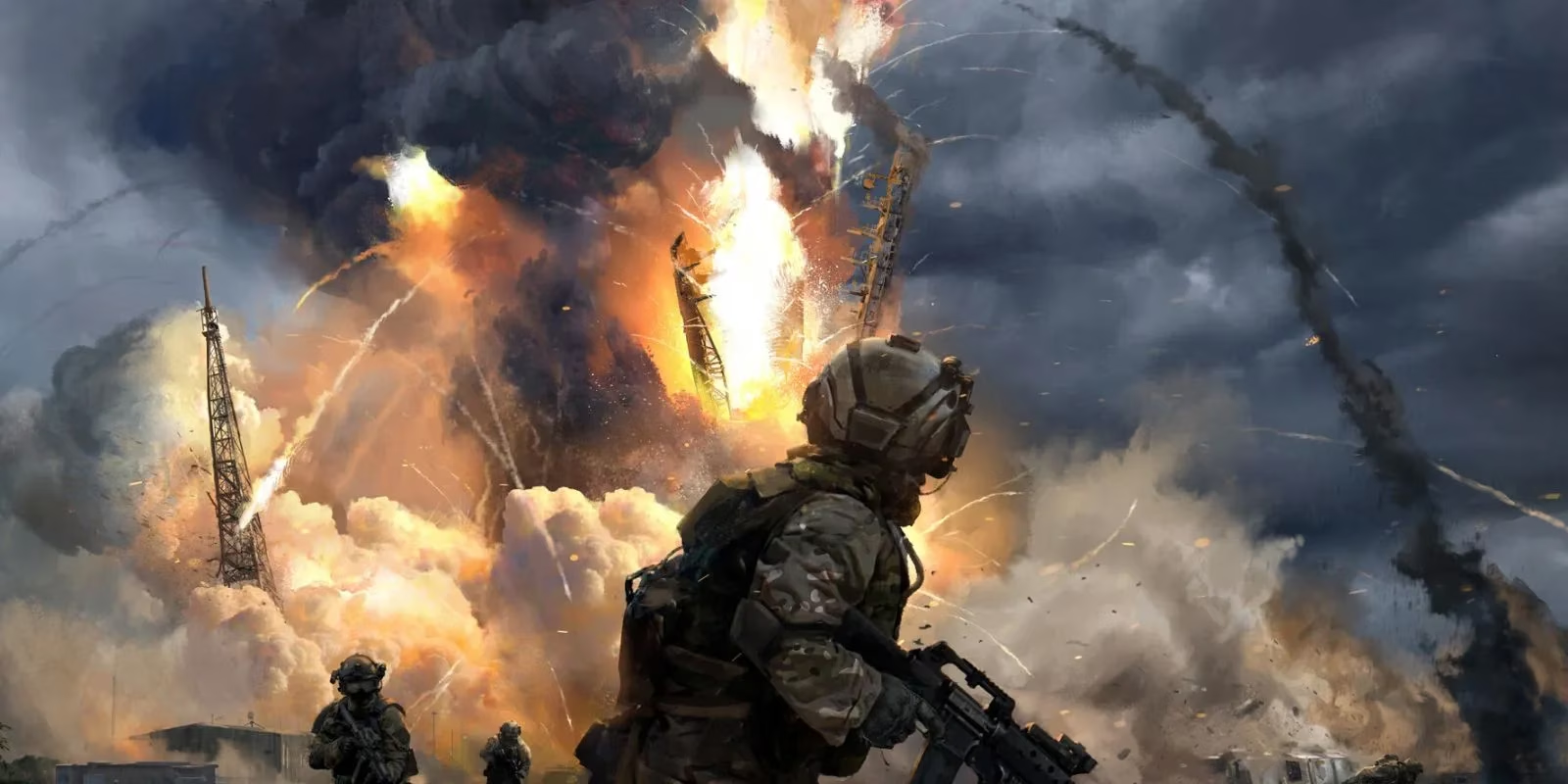
On the Orbital map, the game’s visual high point is impossible to ignore when it happens. The central rocket can be destroyed mid-match, producing a scripted sequence with towering flames, glowing debris, and a shockwave that travels across the map. The accompanying roar makes the moment feel genuinely seismic. It is the closest Battlefield 2042 gets to the Levolution events of earlier titles. But the sequence is not guaranteed. In Conquest, the rocket only blows up roughly halfway through a match if players have dealt enough damage to it. In Breakthrough, it is even rarer. The match must first reach the final objective, the launch sequence has to begin, and then enough players must deliberately target the rocket instead of fighting over the objective.
How many players have actually seen this event from a distance? The answer is likely far fewer than the developers intended.
-
🔹 Conquest: Rocket detonates around mid-match only after sustained damage.
-
🔹 Breakthrough: Final objective must be reached before a launch sequence can begin.
-
🔹 Player coordination: Enough attackers must shift focus to damage the rocket.
-
🔹 Result: A spectacular explosion that many players never witness.
The rest of the game’s explosions are similarly impressive when examined closely. Content creator FlyingAlpha captured a slow-motion montage that highlights how even smaller detonations mimic the grand rocket sequence. Particle effects cascade through smoke, and destroyed vehicles scatter their components across the debris field. A close-range kill with C5 Explosives is especially satisfying: the blast is violent, but the scattering parts give it a strange sense of weight. It may not be entirely realistic—after all, realism is not the game’s strongest suit—but the visual payoff is consistent.
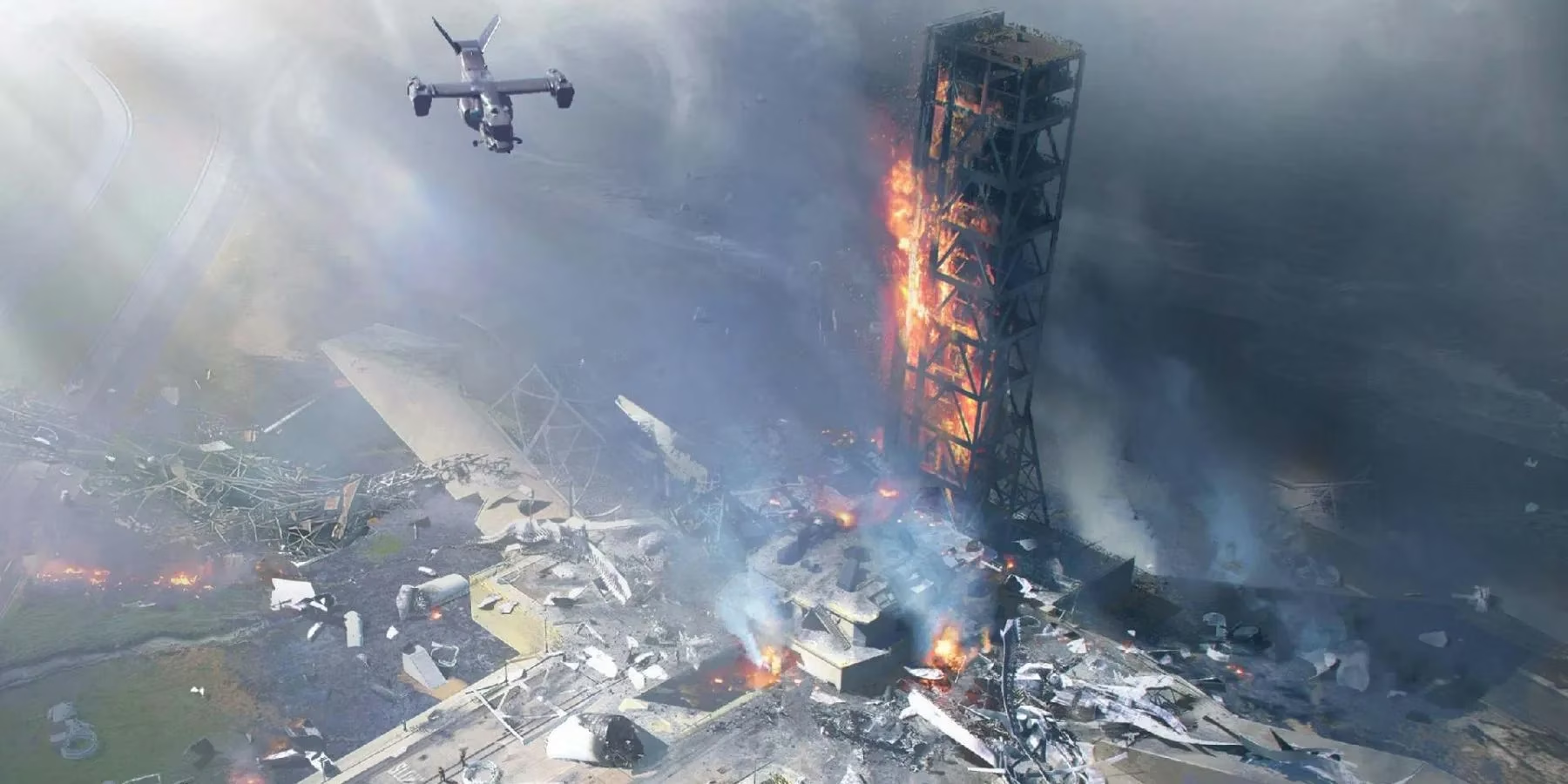
Why This Strength Gets Overshadowed
The explosion effects would be a celebrated feature in a game with a stronger overall art direction. In Battlefield 2042, however, they often become another reminder of what is missing. The game can look technically clean, but its atmosphere has a sterility that feels uninspired compared with earlier entries. Battlefield 1, for example, possessed a remarkably consistent and immersive art direction. Even Battlefield V, despite its faults, had maps that felt lived in and believable as staging grounds for conflict. In contrast, many of Battlefield 2042’s maps can feel like open spaces arranged for combat rather than organic environments shaped by war.
| Design Element | Battlefield 2042 | Battlefield 1 / V |
|---|---|---|
| Explosion detail | High, but easy to miss | Integrated with atmosphere |
| Map atmosphere | Sterile, inconsistent | Consistent and lived in |
| Memorable set pieces | Rare scripted rocket event | Frequent environmental storytelling |
The result is a strange contradiction. Battlefield 2042’s most underappreciated achievement is also a reminder that the rest of the game could have looked dramatically better with the same level of care. Fans have long argued that continued regression in art direction could damage the franchise under EA’s stewardship, echoing the decline of Medal of Honor. That fear has not fully disappeared even as the series moves forward.
Does a single impressive explosion make up for an otherwise flat visual identity? Not entirely.
As of 2026, with Battlefield 2042’s major live-service updates largely behind it, the game remains a case study in missed potential. Returning players still post slow-motion clips of the Orbital rocket and vehicle detonations. The fact that these moments continue to circulate years later shows how much the explosion work resonated. But it also raises a question: why wasn’t that same attention given to the wider atmosphere? The answer may define how history remembers Battlefield 2042.
0 Comments