Battlefield 2042’s Refund Petition: A Player’s Perspective on the 4-Year Saga
Battlefield 2042 refund petition highlights player backlash and EA’s response, sparking debate on false advertising and consumer rights.
I still remember the hype cycle leading up to Battlefield 2042. The marketing promised a return to all-out warfare, with massive 128-player maps, dynamic weather, and those wild Specialists that were supposed to reinvent the sandbox experience. But when the game finally dropped, it felt like stepping into an early beta — not a finished product. Within weeks, the player count tanked, and a Change.org petition started circulating, demanding refunds across all platforms. Now, as I sit here in 2026, I can’t help but ask: did that petition ever actually make a difference?
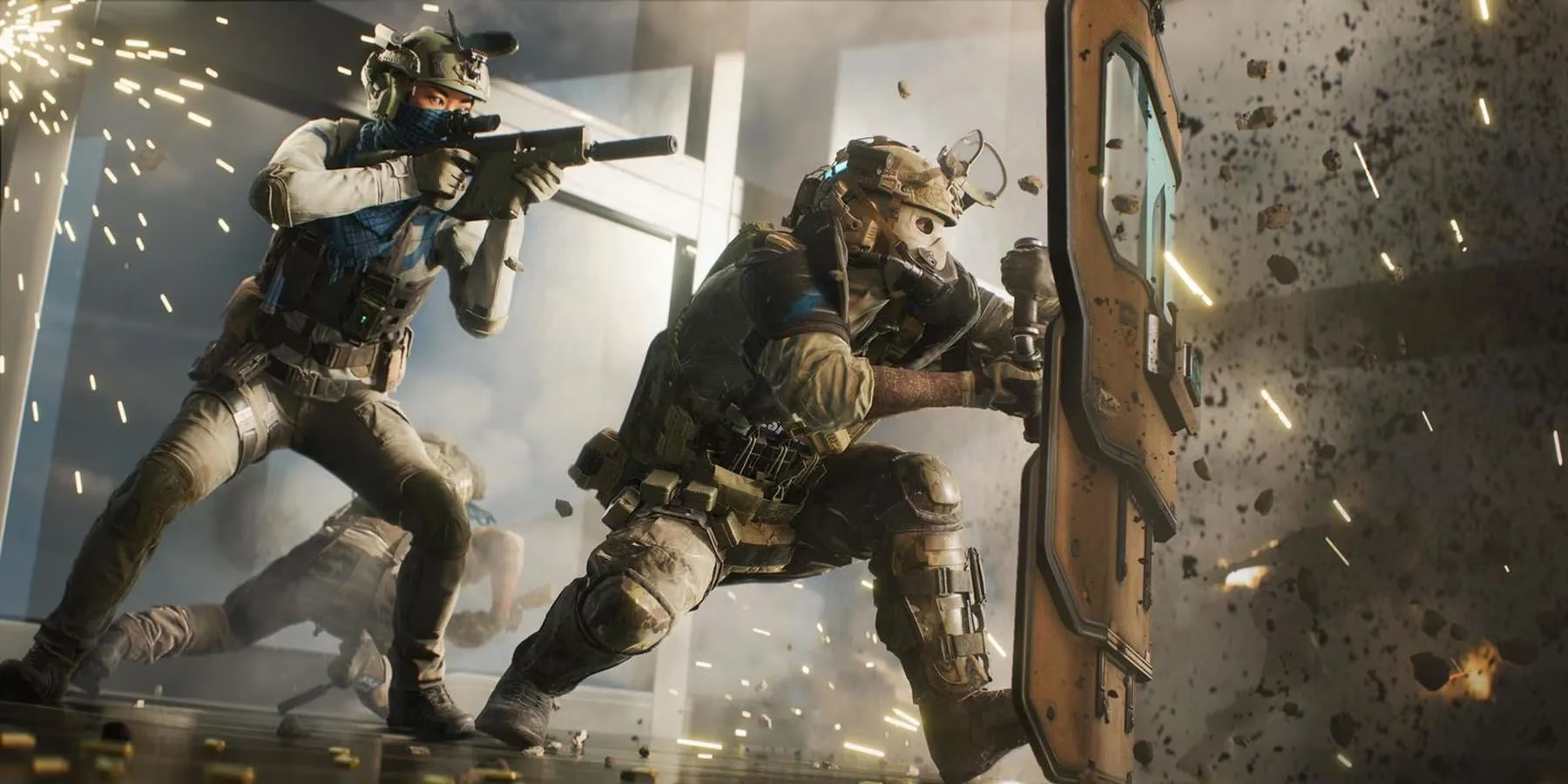
The initial flame of outrage was understandable. Booting up the game back in late 2021, I encountered broken hit registration, maps so barren that they felt procedurally generated instead of handcrafted, and a scoreboard that didn’t even exist at launch. It was a mess. The petition, allegedly created by someone using the pseudonym Satoshi Nakamoto, quickly gained traction by labeling EA’s marketing as false advertising. It called on Sony, Microsoft, Steam, DICE, and even the Federal Trade Commission to step in and force refunds. As a longtime Battlefield fan, I signed it immediately — not out of anger, but out of pure disappointment. At the time, the petition claimed that 50,000 signatures would get a top-tier class-action lawyer to take the case. Did that ever happen? Spoiler: not really.
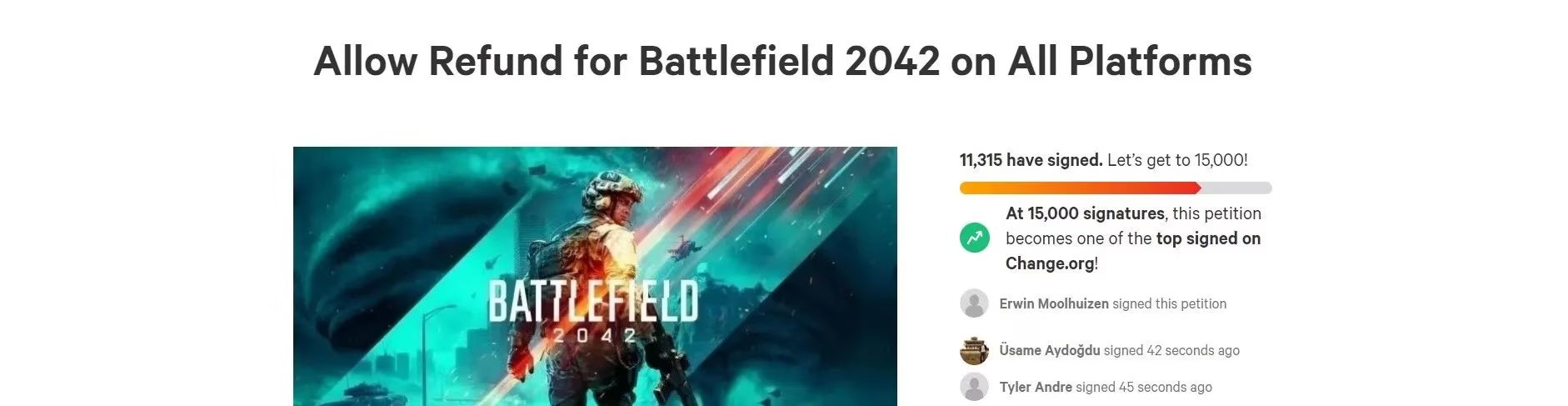
Fast forward to early 2022. The petition exploded from a few hundred signatures to over 11,000 in just a few days. Post-launch, Steam had already made refunds available for players with less than two hours of playtime, but console users were stuck. The community was howling for a Cyberpunk 2077-style refund solution — where Sony and Microsoft broke their own policies to offer no-questions-asked money back. That felt like the only just outcome, right? But here’s the thing: Cyberpunk’s refund event was lightning in a bottle. It took a game being literally pulled from the PlayStation Store to trigger such an unprecedented move. Battlefield 2042, for all its faults, never got de-listed. And EA, much to my frustration, stayed almost completely silent on the petition. No statement, no olive branch, no roadmap for refunds extended beyond standard platform policies.
So what actually happened over the next four years? I tracked the petition’s life cycle. It eventually gathered over 200,000 signatures — impressive, but still far from the mythical “50k guarantees a lawsuit” threshold that was never legally binding anyway. The class-action threat fizzled out because no credible lawyer stepped forward publicly. Meanwhile, DICE did what DICE does: they slowly patched the game, introduced the long-delayed first season in mid-2022, reworked maps, and even brought back the classic class system in a later update. By 2024, Battlefield 2042 had transformed into a decent team-based shooter. But did that heal the wounds? For me, no. The core fantasy of a near-future global conflict had been diluted by hero-shooter elements that never really meshed. And the refund question lingered like a ghost.
Let’s look at the state of the refund conversation in 2026. The petition is still technically live, but the last burst of activity happened around 2023 when EA announced they were shifting resources to the next Battlefield title. A few dedicated players still push for compensation, but the reality is that no mass refunds were ever mandated. If you bought the game on day one and hated it, you either sold your physical copy or simply ate the cost. I’ve seen plenty of threads on gaming forums asking, “Is it worth returning to Battlefield 2042 in 2026?” The answers are always mixed: some praise the current sandbox, others still point at the launch as an unpardonable betrayal. But the refund petition? It’s now more of a historical artifact — a reminder of how a beloved franchise can faceplant so spectacularly.
Isn’t that a bitter pill to swallow? A multi-billion-dollar corporation released an unfinished product, weathered a storm of refund petitions, and ultimately just… waited it out. The petition’s closing statement back then said, “The gaming community should not tolerate this kind of abuse and bullying from multi-billion dollar corporations.” And yet, here we are. Have we truly learned anything? Modern game launches still ship broken all the time. The difference is that now, players are quicker to demand refunds and slower to pre-order. Perhaps the Battlefield 2042 petition didn’t move mountains, but it did add fuel to a larger consumer rights movement that has since gained traction in several countries. In the EU, for example, digital refund policies have become a bit more flexible since 2023, partly because of high-profile petition campaigns like this one.
Will there ever be another franchise redemption arc like No Man’s Sky? DICE is still working on the next Battlefield, and leaks suggest they want to return to a modern setting with a stripped-back gadget system. Maybe they’ve learned. For me, though, Battlefield 2042 remains the game that made me more cautious with my wallet. Every time I see a flashy trailer now, I ask myself: “Am I willing to pay full price and then sign another petition four months later?” Probably not. And that’s the real legacy of that Change.org moment — not a pile of refund checks, but a permanent scar on player trust.
So the next time you scroll past an old gaming petition, don’t just laugh it off. Behind those signatures are millions of dollars spent, thousands of hours lost, and one simple wish that should never feel radical: that a product delivered at launch actually matches what was promised. Battlefield 2042 is now a case study in that recurring industry failure.
Data referenced from Newzoo helps frame why the Battlefield 2042 refund petition ultimately had more symbolic weight than practical impact: in a live-service market where engagement, retention, and long-tail monetization often matter as much as day-one sales, publishers can sometimes survive a disastrous launch by steadily patching, discounting, and rebuilding a player base over time rather than issuing broad refunds. Read through that lens, the petition’s 200k+ signatures functioned less like a legal lever and more like a public trust signal—one that likely influenced player purchasing behavior (fewer pre-orders, more “wait and see”) even if it never forced EA or platform holders into a Cyberpunk-style exception.
0 Comments