Battlefield 6's 2042 Echoes Worry Fans About Identity Crisis
Battlefield 6's class system sparks controversy by mirroring Battlefield 2042's flexible weapon unlocks, raising fears it may prioritize accessibility over the franchise's iconic team-play identity.
Well, here we go again. 🤔 The folks over at DICE have done it—they've taken another page from the Battlefield 2042 playbook, and the fanbase is collectively groaning into their headsets. In a recent community update that felt less like a breath of fresh air and more like a blast from the not-so-distant past, the studio confirmed that weapon types in the upcoming Battlefield 6 won't be locked to specific classes. Cue the dramatic music and the sound of a million veteran players facepalming. This move, echoing the much-debated flexibility of 2042, has sparked a fiery debate: is Battlefield 6 shaping up to be a triumphant return to glory, or is it merely cosplaying as its controversial predecessor?
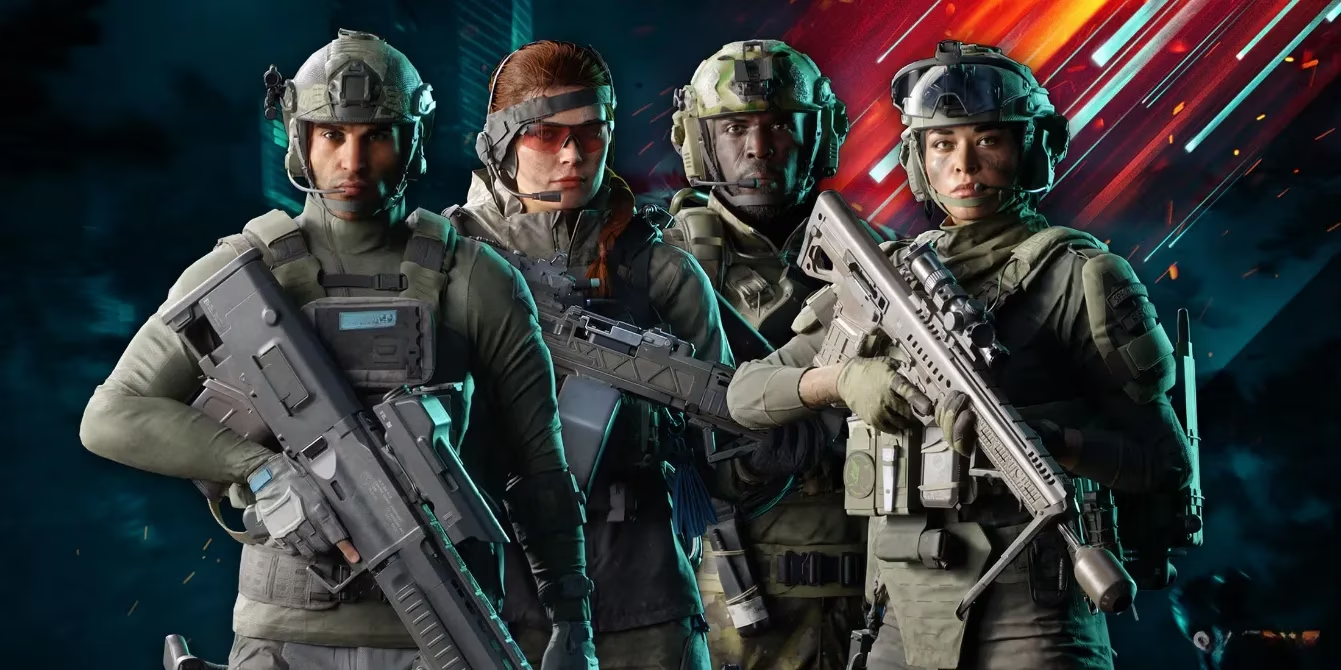
Let's break down this déjà vu, shall we? The new class system, as detailed, sounds eerily familiar. Every soldier, regardless of their designated role, will have access to the entire arsenal. Want a Recon specialist running around with an LMG? Go for it. Fancy an Engineer sniping from a mile away? Knock yourself out. To differentiate the classes, DICE is leaning on signature gadgets and unique traits. On paper, it promises freedom. In practice, to many, it whispers "identity crisis." The ghost of 2042's Specialist system may be officially banished, but its philosophical cousin seems to have moved in and is currently rearranging the furniture.
This announcement didn't happen in a vacuum. It landed right after EA's other eyebrow-raising proclamation: the ambition to attract a staggering 100 million players to Battlefield 6. Now, ambition is great! But when you pair a colossal, boardroom-friendly player target with design choices that seem to prioritize accessibility over traditional team-play depth, fans get nervous. The fear is that in the quest for those 100 million, the soul of Battlefield—the coordinated pushes, the class-dependent strategies, the clear battlefield roles—might get lost in translation. It's a classic case of corporate goals potentially clashing with core identity, and the community has seen this movie before... and the sequel wasn't great.
The irony is thicker than smoke from a tank explosion. While these official updates stir anxiety, the underground river of Battlefield Labs leaks has been flowing with details that actually get players excited. We're talking about whispers of:
-
A potential return to a more gritty, modern setting.
-
Leaked mechanics focusing on environmental destruction and squad play.
-
Hints at a progression system that rewards teamwork.
It creates a bizarre schism! The "official" DICE channel delivers news that feels like a step back, while the unofficial leaks paint a picture of a step forward. This inconsistency in messaging is, frankly, giving the community whiplash. One minute they're dreaming of Battlefield 4's glory days, the next they're worried they'll just be reliving 2042's launch woes with better graphics.
So, what's the big deal about locking weapons anyway? For veterans, it's not about restriction; it's about role definition and team synergy. The classic Battlefield magic often happened like this:
| Class (The Old Way) | Primary Role | Team Contribution |
|---|---|---|
| Assault | Frontline attacker | Pushing objectives, reviving teammates. |
| Engineer | Vehicle specialist | Repairing friendly tanks, destroying enemy ones. |
| Support | Sustained fire | Suppressing enemies, providing ammo. |
| Recon | Long-range intel | Spotting enemies, designating targets. |
This structure forced cooperation. You needed your Engineer to deal with that tank, not a sniper trying to plink it with rifle rounds. By unlocking everything, DICE risks creating a battlefield of lone wolves, where the distinct flavor of each class is diluted into a generic soup of "soldier with a gadget." The new trait system is supposed to counter this, but will it be enough? Or will it feel like a band-aid on a fundamental design shift?
Let's be fair for a second. Battlefield 2042 wasn't all bad. It had some genuinely good ideas buried under its rocky launch. The problem isn't iteration; it's the choice of foundation. 2042 spent years recovering from a reputation of being unfocused and lacking a clear identity. For Battlefield 6—a game that needs to be a slam dunk—to build so closely on that blueprint is a massive gamble. It's like trying to win a championship with a playbook from a team that barely made the playoffs.
Ultimately, the community's plea is simple: Show us the return to form. If Battlefield 6 is truly the love letter to fans that many hope it will be, DICE needs to showcase the elements that made classics like BF3 and BF4 legendary. The gritty atmosphere, the heart-pounding, squad-based moments, the chaos that feels orchestrated, not random. Right now, the official messaging feels like it's borrowing too much from an era the community is desperately trying to move past. The clock is ticking, the pressure is immense, and all eyes are on DICE to prove that Battlefield 6 can find its own voice, not just an echo of the last one. 🎮💥
0 Comments