Battlefield's Quiet Reclamation: Poised Between Redemption and the Shifting Tides of War
Battlefield's platform agnostic approach and revived ambition position the franchise for a hopeful resurgence against Call of Duty.
In the restless murmur of the gaming world, where empires rise and fall with each patch and trailer, the destiny of a certain military shooter has become a quiet, stirring elegy. Not the one that tops the charts with annual, reliable thunder—no, the other one. The one that once promised grand, unscripted chaos across vast maps, where helicopters carved the sky and buildings crumpled into dust. It had stumbled, badly, and for a while, it seemed the dust might claim it for good. But the seasons have turned. It is 2026, and the conversation around the Battlefield franchise wears a different complexion now—one of cautious hope, woven from threads of near-forgotten ambition and the faint, silver lining of a rival's uncertain future.
Call of Duty, that monolithic name, has long cast a shadow that could freeze a younger sibling in place. The 2023 acquisition of Activision Blizzard by Microsoft sent tremors through the industry, birthing anxious speculation: might the next decade see Call of Duty retreat into the warm embrace of Xbox and PC exclusivity, leaving PlayStation barren? Both corporate giants, Sony and Microsoft, have since signed public declarations and multi-year agreements to keep the series multiplatform, yet the old whispers never truly die. They linger, a ghost at the feast, and in that half-light, Electronic Arts saw something glinting—not a threat, but a chance. A tremendous chance, as EA CEO Andrew Wilson once put it, born from being "platform agnostic." Battlefield, unlike its rival, wears no master's collar; it walks freely among Xbox, PlayStation, and PC. In a time of potential tectonic shifts, that freedom has become a quiet superpower.
But, you know, freedom means nothing if the soldier can't stand. Let's be real for a moment: the last two iterations of Battlefield had left the franchise nursing some very public wounds. Battlefield V drew ire for its stylized, revisionist take on history, and then came Battlefield 2042, a launch so scarred by bugs and mechanical controversy that many questioned whether the series could ever regain its footing. Wilson himself acknowledged the missteps, admitting EA hadn't "delivered in the last two iterations." The confession hung in the air, heavy and honest. The once-proud competitor had become a cautionary tale—its sprawling 128-player dreams populated by more glitches than glory. Yet, the battlefield is never truly empty. It remembers.
And here's the thing: sometimes a fall is just a prelude to a more considered rise. In the years since that admission, EA has done something that the bean-counters of old might have avoided—it turned to storytellers. Marcus Lehto, co-creator of the original Halo universe, was brought in to forge not just a campaign, but a soul. The narrative that emerged, launched in late 2024 alongside a reimagined live-service blueprint, felt like an exhale after years of holding breath. It wasn't just a linear string of explosions; it became a sweeping, character-driven journey through near-future conflict, steeped in the moral fog of war. Critics and players alike noted the shift—a return to the grounded, gut-punch storytelling that had been missing since the days of Bad Company. The campaign gave the franchise a heartbeat again, a pulse that synchronized with the thunderous multiplayer.
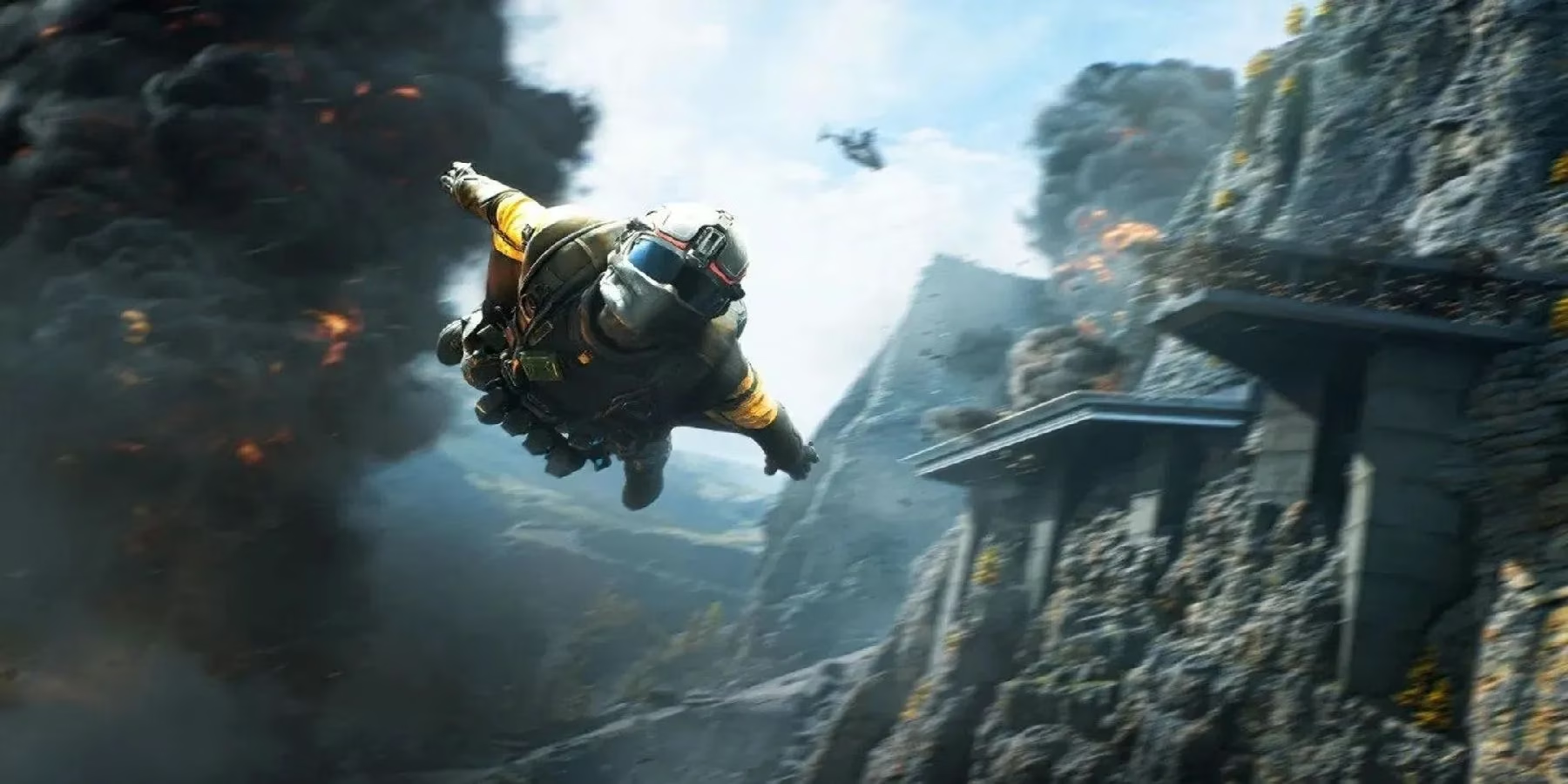
The multiplayer, too, underwent a transformation that can only be described as humbling and painstaking. The team behind Battlefield 2042 spent an entire year performing triage—rewriting netcode, redesigning specialist systems, and slowly, tenderly, restoring the sandbox havoc that veterans cherished. By the time the next entry, tentatively titled Battlefield: Echoes, entered its reveal phase in spring 2026, the public sentiment had swung. Players who had left in disgust were now creeping back through clips of dynamic weather flattening entire towns, of wingsuit drops that ended in breathtaking squad wipes, of a game that seemed to be listening. Listening... can you imagine? A triple-A shooter that actually listens. Well, it happened.
What makes this resurgence poignant is its timing. As Call of Duty continues its yearly cadence under Microsoft's umbrella—still multiplatform, but under a scrutinized spotlight—Battlefield is no longer just the "alternative". It has become a sanctuary for those who crave combined arms chaos without the twitchy, SBMM-ruled corridors. The studio's dedication to being everywhere, to offering its dirty, beautiful war on any console or PC a player owns, feels less like a business tactic and more like an ideology. "Buy what you want, play where you want," the message seems to say, a gentle rebellion against the looming walled gardens.
Still, the road ahead remains etched with caution. The ghost of 2042's launch disaster is not easily exorcised, and the community waits, arms crossed, for proof that Echoes can stand up on day one and not immediately break both its legs. The competitive landscape has also evolved. Free-to-play shooters and extraction triumphs nibble at the edges, demanding that Battlefield innovate without betraying its core. But there's a texture to hope now that was absent at the start of the decade. It's in the way a recent gameplay showcase from a pre-alpha build left the audience in stunned silence, not because of a scripted spectacle, but because of a spontaneous, systemic moment: a soldier, low on health, desperately repairing a tank under fire as a forest fire crept across the hillside, and the driver, a complete stranger on the server, typed a single word in chat—"Stay."
That kind of magic can't be manufactured. It arises from the architecture of freedom that Battlefield has always promised, and for the first time in years, it's being allowed to breathe. The narrative direction under Lehto's vision, the hard-won stability, the platform-neutral stance that now feels like a quiet act of defiance... all of it has stitched a new banner for the series to carry. No one is calling it a king again yet, but they are saying something perhaps more valuable: they're saying it's back.
And so, 2026 finds Battlefield in a place of poignant stillness, a pause before the next great charge. The future is unwritten, but the pen is no longer broken. Whether Call of Duty ever truly limits its console home or simply continues to test the waters of exclusivity through perks and early-access deals, Battlefield will be there, on every platform, with its grit, its atmosphere, and its newborn sense of purpose. The war for attention is never-ending, but amid the noise, one veteran has quietly reloaded, adjusted its sights, and is waiting for the fog to lift. You can almost hear the distant rumble of approaching armor, the delicate rest of a finger drifting toward the trigger. It feels like something is about to begin—again.
0 Comments