From Battlefield to Barnyard: The Hilariously Tragic Collapse of Battlefield 2042
Battlefield 2042's player count fell below Farming Simulator 22, leading to a 200k refund petition and becoming a live-service warning.
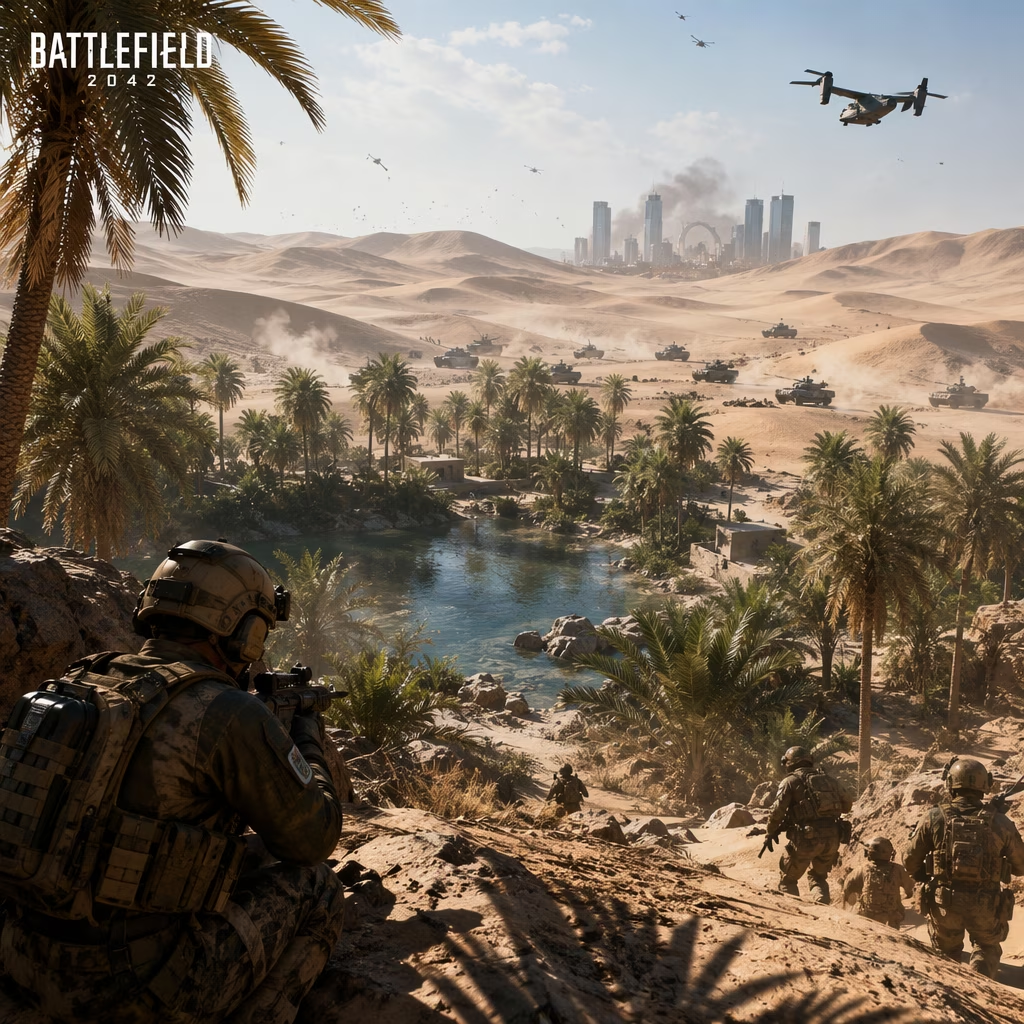
Back in the heady days of late 2021, hype for Battlefield 2042 bubbled like a pre-match ammo crate. DICE promised a near-future sandbox packed with tornadoes, wingsuits, and 128-player chaos. Yet by early 2022, the only thing soaring was player frustration – and the concurrent user count of a certain agricultural sim.
 .jpg)
.jpg)
When a game's biggest rival turns out to be Farming Simulator 22, you know a franchise has strayed too far from its roots. In November 2021, just weeks after Battlefield 2042 launched, the combine harvesters overtook the combat medics. It was a warning shot that no amount of portal mode nostalgia could deflect. By early 2022, the 24-hour peak on Steam had withered to under 5,000 players – a ghost town where 105,397 had once stampeded. For context, that\u2019s fewer boots on the ground than a mid-table Call of Duty lobby on a sleepy Tuesday.
Players weren\u2019t just leaving. They were sprinting backwards. Battlefield V, the very game DICE had abandoned with a whimper, suddenly looked like a masterpiece. Its active players climbed, a bizarre reversal that felt like watching a phoenix rise from ashes while the new guy drowned in a puddle. Even notoriously dedicated communities threw in the towel.
Take South Africa. The region\u2019s Battlefield faithful had always been a small but fiercely loyal band. But when 2042\u2019s servers emptied out, one lone soldier had to host a single server for the entire country. Let that sink in: a whole nation\u2019s matchmaking hung on one person\u2019s Wi-Fi. If Gregor went offline to braai, the South African Battlefield experience simply ceased to exist. It was either that or queue into European latency purgatory.
Discontent boiled over into a now-legendary Change.org petition demanding refunds. Back in early 2022, signatures rocketed from 75,000 to just under 200,000 faster than a C5 exploding at dawn. That milestone made it one of the most-signed gaming petitions in the platform\u2019s history. EA and DICE responded with the kind of silence usually reserved for tombstone inscriptions. Rumours swirled that the publisher was mulling a free-to-play pivot. The irony was thick enough to spread on a ration tin: a move that would enrage the very people who had already paid full price, potentially making them feel less like valued customers and more like involuntary beta testers funding a freebie handout.
Zoom forward to 2026, and Battlefield 2042 has become a cautionary fireside story for game studios. Yes, the game still exists – it shuffled into a limbo of intermittent updates, a half-hearted free-weekend rotation, and a player base that would struggle to fill a medium-sized cinema. The promised \u201clive service\u201d roadmap evaporated faster than a puddle on Hourglass. Attempts to reintroduce classes arrived too late; the soulless Specialists had already left a permanent scar. In the end, the only truly successful Battlefield releases of the 2020s were the nostalgic remakes buried inside Portal.
Reflecting on the whole debacle, it\u2019s hard not to chuckle. A franchise built on all-out warfare was defeated by tractors. A community so fractured that an entire region depended on a single Good Samaritan with a server box under his desk. And a refund petition that grew louder than the game\u2019s own soundtrack. If history has taught us anything, it\u2019s that players will forgive almost anything – except being taken for granted. Battlefield 2042 wasn\u2019t just a misfire; it was a masterclass in how to torpedo goodwill with a wingsuit strapped to your back.
Still, every disaster has its silver lining. The saga gave us the enduring meme of farming outscoring shooting, and reminded publishers that no amount of marketing can substitute for a game that actually works. As we stare down the barrel of whatever next-gen Battlefield emerges next, you can bet the execs will be checking the Steam charts for rival agricultural simulators before launch.
0 Comments