My Battlefield Labs Odyssey: Shattering the Future of War, One Pixel at a Time
Discover the future of destruction in Battlefield Labs, where the community-driven demolition derby creates a GLORIOUSLY UNBALANCED tactical chaos that redefines the next title's bedrock.
Let me tell you, the year is 2026, and I've just crawled out from under a mountain of digital rubble, my ears still ringing with the glorious sound of collapsing architecture. I am not a developer. I am not a critic. I am a humble gun-for-hire, a digital soldier of fortune, and for the past few months, I have been a guinea pig in the most explosive playground imaginable: Battlefield Labs. And friends, the future of destruction is here, and it is GLORIOUSLY UNBALANCED in all the right ways! Remember the sterile, predictable crumbles of Battlefield 2042? Those days are gone, vaporized by a community-driven demolition derby that is reshaping the very bedrock of the next title.
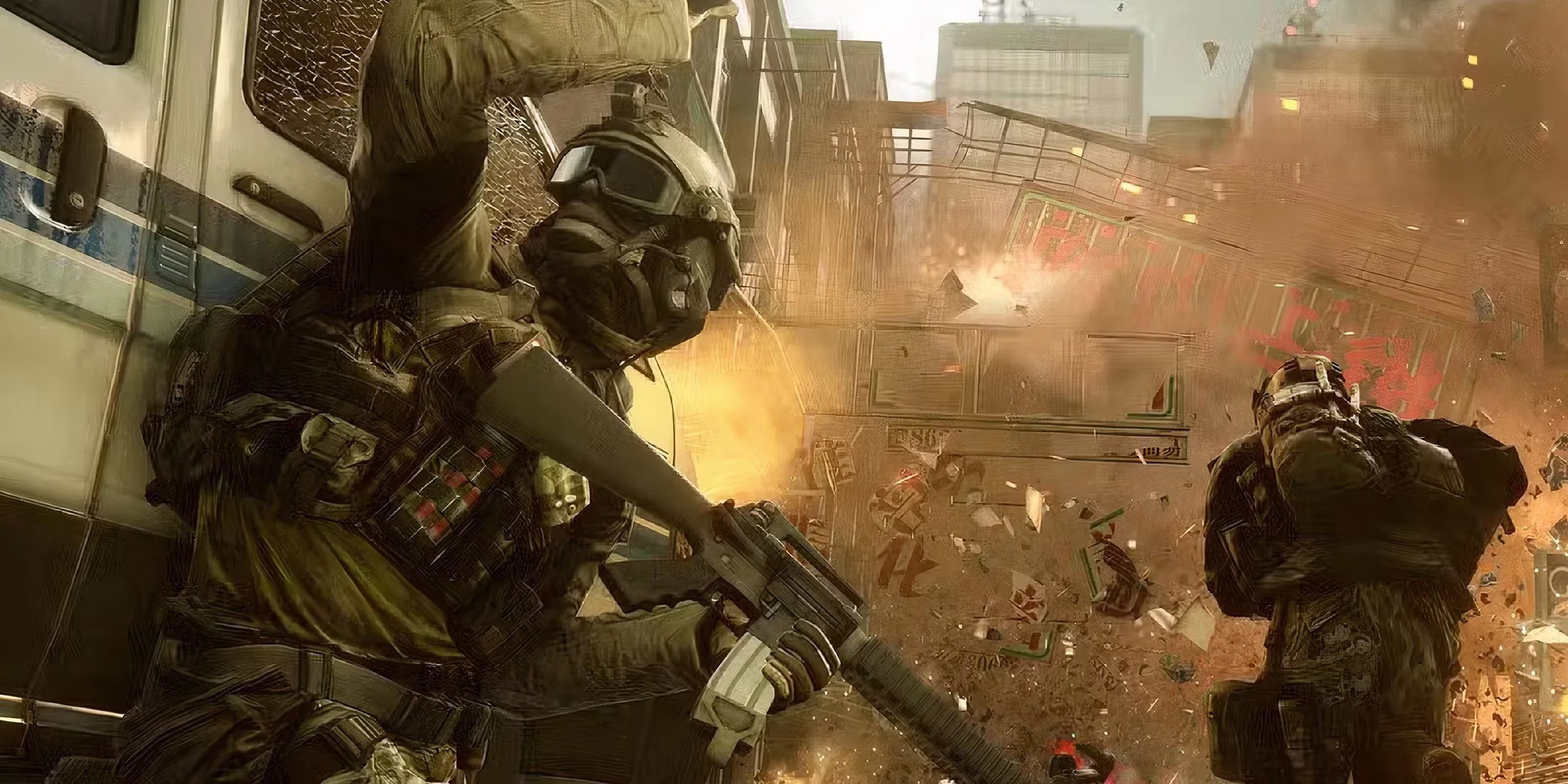
It all started back in that frantic February of 2025. EA threw open the doors to the Labs, and we, the ravenous horde of players, nearly broke the internet trying to get in. The promise? To get our grubby hands on the game's guts before anyone else. The first test in March was all about guns and movement—fine, necessary, but predictable. Then, they unleashed us on the environments. This... this was the moment. The development team, those brilliant, slightly mad architects of chaos, handed us the keys to the kingdom and said, "Break it. Tell us how it should break."
And break it we did! The official goal, as stated in their Steam communiqués, was to achieve "balance." Pah! What they really wanted was controlled, beautiful, tactical chaos. Our mission was to answer the sacred questions:
-
What deserves to die? Is every wall fair game? Should that quaint little gazebo offer cover, or should it be a death trap waiting for one well-placed rocket?
-
How does destruction become strategy? Is it just about making new doors, or can you collapse a building onto an objective?
-
What is the cost of collateral damage? If I bring a skyscraper down on a tank, should the resulting shockwave knock me on my backside?
Let me paint you a picture with words, because the video snippet they shared only scratches the surface. I fired a rocket at the corner of a three-story house. In the old days, maybe a hole appeared. Not anymore. The wall didn't just vanish; it peeled away in chunks, like some monstrous, concrete apple being devoured. They call this the "apple core" method, and it's a game-changer. You could see the skeletal wooden frame inside, individual rooms exposed like a dollhouse hit by a tornado. I didn't just make a hole; I created a multi-level, vertical killzone.
But the real magic, the moment that made me cackle with manic glee, was the aftermath. A huge chunk of the facade, a piece bigger than my soldier, tore loose, tumbled through the air with terrifying weight, and slammed into the ground right where I had been standing seconds before. The shockwave was visceral, the dust cloud dense. I had to change position immediately. My own destruction had nearly become my tombstone! This wasn't just eye candy; it was a dynamic, environmental hazard with real consequences. Debris is now a lethal actor in this play.
Here’s a quick breakdown of the new destruction philosophy we're helping to forge:
| Old Destruction (Pre-Labs) | NEW Destruction (Post-Labs 2026) |
|---|---|
| Scripted, predictable collapse patterns | Dynamic, physics-based "apple core" degradation |
| Debris disappears or is cosmetic | Debris persists, creates new terrain and hazards |
| Destruction mainly for new paths | Destruction is a core tactical weapon and environmental hazard |
| Balance meant "less explosive" | Balance means meaningful choice and consequence |
The contrast to the "stale-feeling" destruction of 2042 couldn't be sharper. Back then, bringing down a building felt like checking a box. Now, it feels like committing an act of god. Every explosion is a calculation. "If I blow this support beam, will it block the street or open a flank? Will the noise bring every enemy on the map running? Can I use the dust cloud for cover?"
The process is relentless. We test, we break, we scream feedback into the void (which, thankfully, the devs are actually listening to). They scrutinize every piece of data, every complaint about a wall being too stubborn or a collapse being too scripted. This isn't a one-and-done test; it's an ongoing conversation between the architects of war and its foot soldiers. We are collectively ensuring that the next Battlefield doesn't just have destruction—it has an ecosystem of ruin.
So, what's the final verdict from the trenches? The future is loud, dusty, and incredibly dangerous in the best way possible. The next Battlefield is being built on a foundation of community-sourced chaos. We're not just testing a game; we're stress-testing the very laws of physics in a digital warzone. And when it finally launches, you'll know that every crumbled wall, every precarious overhang, and every deadly piece of falling masonry has been approved by the most demanding critics of all: players who live to see the world burn... strategically, of course. The labs are open, the charges are set, and the only thing left to destroy is the notion that battlefield destruction can ever be boring again. 💥🏗️🎮
0 Comments