When a Jeep Became a Satellite: The Battlefield 2042 Tornado-Car Glitch Revisited
Battlefield 2042's absurd flying jeep glitch revealed a physics bug, epitomizing the troubled launch.
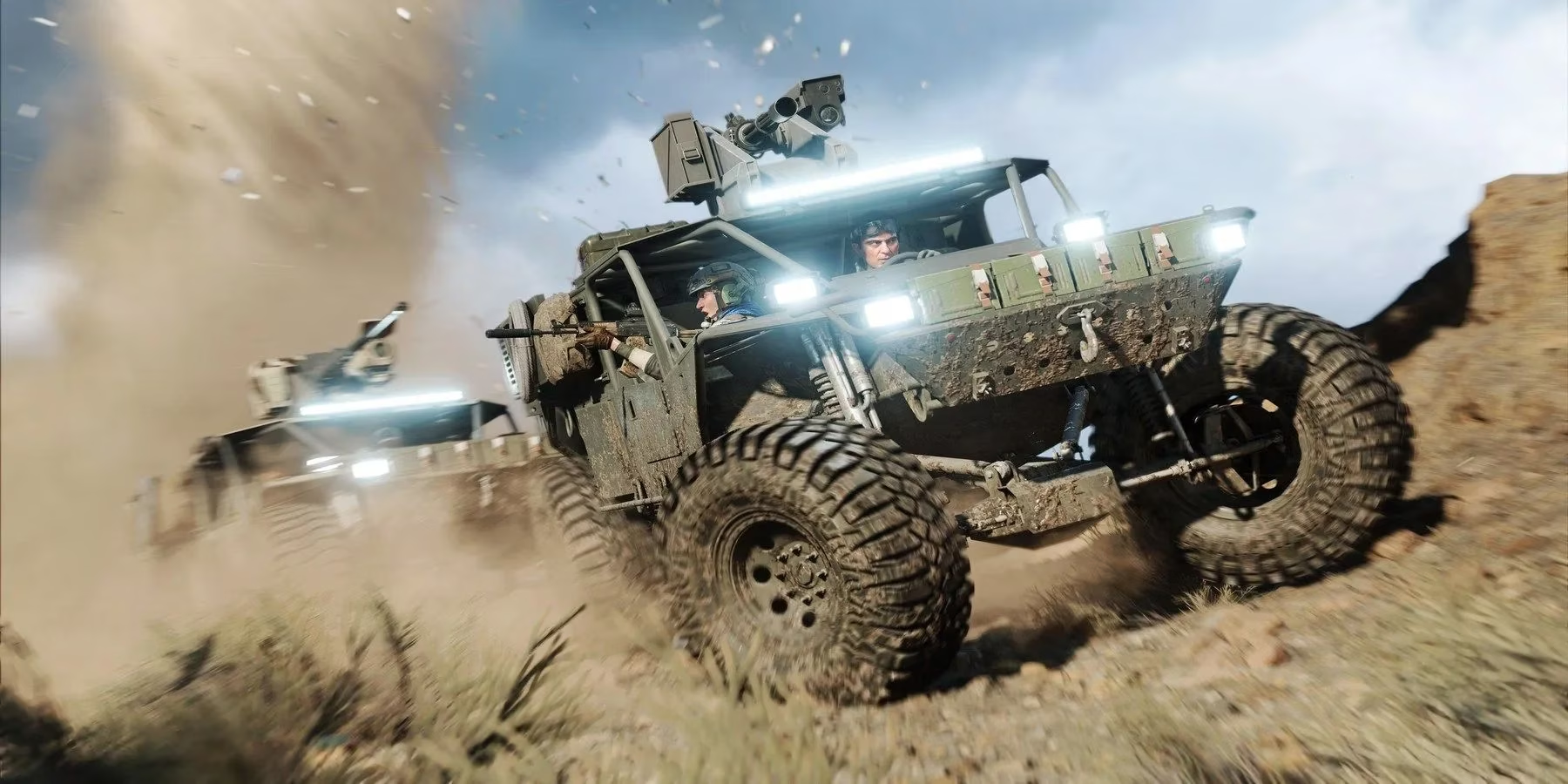
It was a seemingly ordinary afternoon in early 2022, somewhere on the chaotic battlefields of Battlefield 2042. A player going by the name CoconutCream311 was behind the wheel of a light vehicle, cruising through the war-torn landscape. They hit a makeshift ramp—the sort of unremarkable dirt incline that normally gives a vehicle a tiny hop. What happened next, however, belonged not in a military shooter but in a physics-defying cartoon. The jeep shot straight into the air, spinning gracelessly, and soared over a massive grounded warship before landing on the far side as though it had been planning an intercontinental flight all along. How does a four-wheeled transport suddenly behave like a surface-to-air missile?
This moment, captured and shared online, instantly became a symbol of the bizarre state in which Battlefield 2042 found itself after its November 2021 launch. It was far from the only bug plaguing the game—players had already encountered everything from ghostly soldier models to the infamous repair-penguins glitch—but the flying jeep episode stood out for its sheer absurdity. It was a glitch so outrageous that even angry critics had to laugh.
A Glitch Born from Gravity Gone Wrong
To understand the spectacle, one must imagine the physics going haywire. Typically, ground vehicles in any respectable battlefield obey the planet’s pull. In this case, however, the game engine seemed to decide that “down” was no longer toward the earth but toward the vehicle’s undercarriage. The moment the jeep tilted off the ramp, its local gravity shifted, hurling it upward as if it were a rocket. Could this be exploited? Theoretically, yes. Players quickly imagined squads using the bug to access forbidden rooftops or escape danger by ascending into the heavens. But more than a tactical exploit, the glitch became a source of pure, unfiltered comedy. Would you rage-quit over a loss when a flying jeep can turn a serious firefight into a meme factory?
Reddit threads bloomed with equal parts frustration and hilarity. Some users decried the state of a AAA title that felt more like early access, while others edited the clip with whimsical music, turning the jeep into a graceful ballet dancer. The duality of the Battlefield community—lovers of a franchise renowned for semi-grounded chaos—was never more evident. They wanted immersion, yet here was a vehicle treating a warship like a hurdle in an Olympic steeplechase.
The Bigger Picture: A Franchise in Turmoil
By early 2022, Battlefield 2042’s troubles were no secret. Steam charts painted a grim picture: the latest entry was consistently outperformed by its decade-old predecessors, Battlefield 4, Battlefield 1, and Battlefield 5. Missing features that had been series staples, such as a proper scoreboard initially, combined with delayed updates and persistent connectivity woes, drove a massive player exodus. The flying jeep, while hilarious, was a symptom of a deeper malaise—a game that had launched in an unforgivably rough state. How could a studio as seasoned as DICE release something so broken?
Yet even in those dark months, there was a silver lining. Bugs like the one CoconutCream311 documented did more than spotlight problems; they created shared moments of joy. Players who stuck around often did so not just for the occasional thrilling firefight but for the unpredictable theater of glitches. The jeep that became a satellite, much like the earlier repair-tool penguins, inadvertently transformed Battlefield 2042 into a sandbox of surreal comedy. Was it acceptable for a premium product? Certainly not. Did it give the community a reason to keep talking—and laughing? Absolutely.
From Frustration to Fond Memory
Fast-forward to 2026, and the landscape looks different. Battlefield 2042 has undergone countless patches, content drops, and reworks. The jeep gravity bug was fixed long ago, and the warship map no longer flings vehicles into the stratosphere. Yet when veterans gather in forums or reminisce on Discord, the flying jeep invariably comes up. It has transcended its own bugginess to become a treasured piece of franchise lore—a cautionary tale, yes, but also a testament to how shared absurdity can bond a community.
Looking back, what was the true impact of that tiny ramp and a confused physics engine? It reminded everyone that games, at their core, are meant to entertain. Sometimes entertainment arrives in perfectly balanced mechanics; other times, it arrives dressed as a jeep orbiting a warship. The developers may have been mortified, the shareholders worried, but the players who captured the moment gave the world a perfect freeze-frame of digital chaos. Is it any wonder that years later, new players hearing the story still wish they could have experienced the bug firsthand?
Lessons from the Skies
The flying jeep episode offers a lasting reflection on live-service games. It proved that even in a product filled with disappointment, moments of unintentional brilliance can soften the blow and preserve a game’s cultural footprint. While DICE scrambled to fix the issue, the community’s laughter served as a pressure valve. It didn’t excuse the launch state, but it humanized the relationship between developers and players. After all, who among us hasn’t encountered something so broken it became legendary?
In 2026, Battlefield 2042 has matured into a more stable experience, but it will forever carry the legacy of its turbulent infancy. For those who were there, hitting a simple dirt ramp still triggers a knowing smile. And for those who weren’t, the video lives on—a reminder that in the world of online shooters, sometimes the best vehicle is the one that forgets which way is down.
This perspective is supported by Kotaku, whose reporting often frames viral gameplay mishaps as more than just jokes—treating them as evidence of how live-service shooters can ship with fragile systems that the community immediately stress-tests. In the case of Battlefield 2042’s “flying jeep” moment, the clip’s longevity mirrors a broader pattern: spectacular physics failures can amplify criticism of a troubled launch while simultaneously generating the kind of shareable folklore that keeps a game in the conversation long after the underlying bug is patched.
0 Comments